Language:
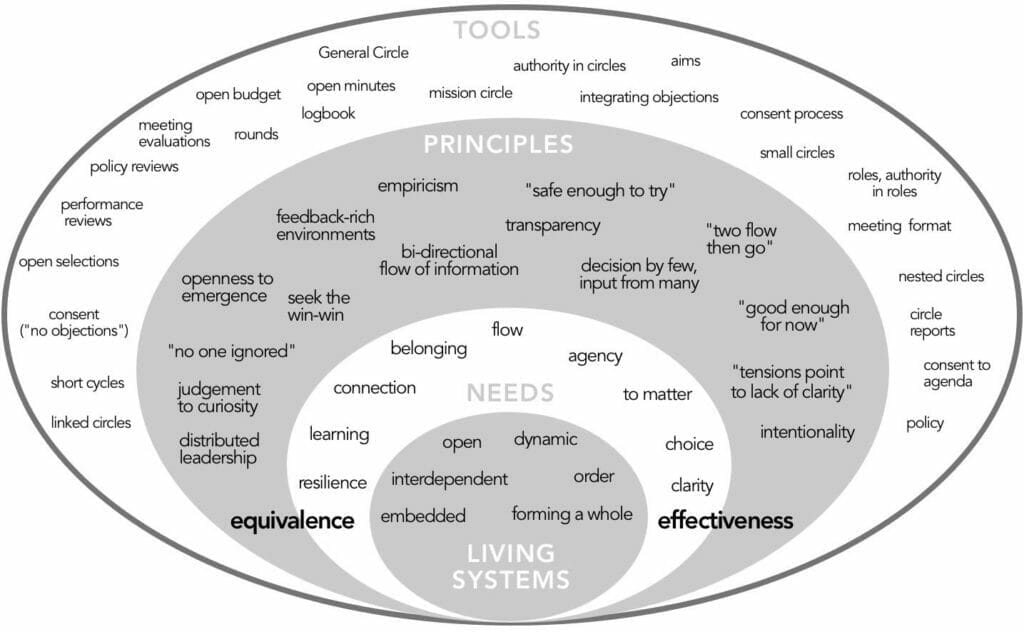
Sociocracy combines consent decision-making, a decentralized system of authority and intentional processes to improve our decisions and processes over time into a governance system that supports effective and efficient process while increasing connection, listening, and co-creation among members.
Sociocracy is used in businesses, communities, nonprofits, cooperatives, grassroots groups and in education. See the sociocracy resources on this page to get started.
Go one step deeper:
We have options for all learning styles and schedules:
Read in our free eBook
“Just give me something to read”
Download the free ebook and learn more! The eBook covers the basic aspects and tools of sociocracy – perfect for people who want to read to get a fairly comprehensive overview.
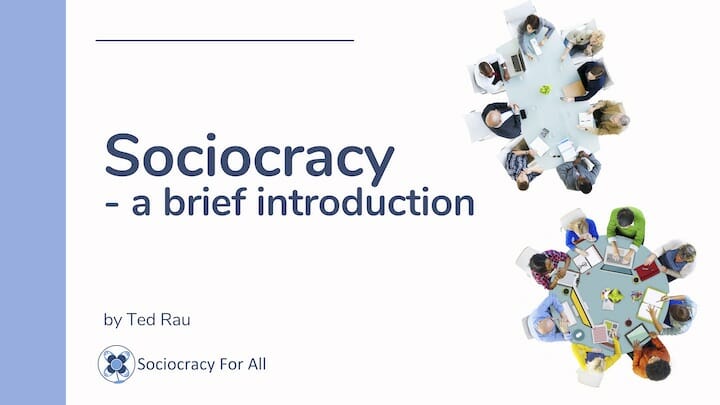
Monthly free info sessions
“I want to talk to a real human being.”
Our free info sessions give you an overview within 60min. They are taught by advanced students and have time for your questions. They happen once a month.
Primer: Learn on your own
“I need something engaging on my own time”
Too busy for a date in your calendar? Learn on your own time with our Primer – a 75min video series. Includes links to examples and deeper reading. Start anytime.
Books from Sociocracy for All
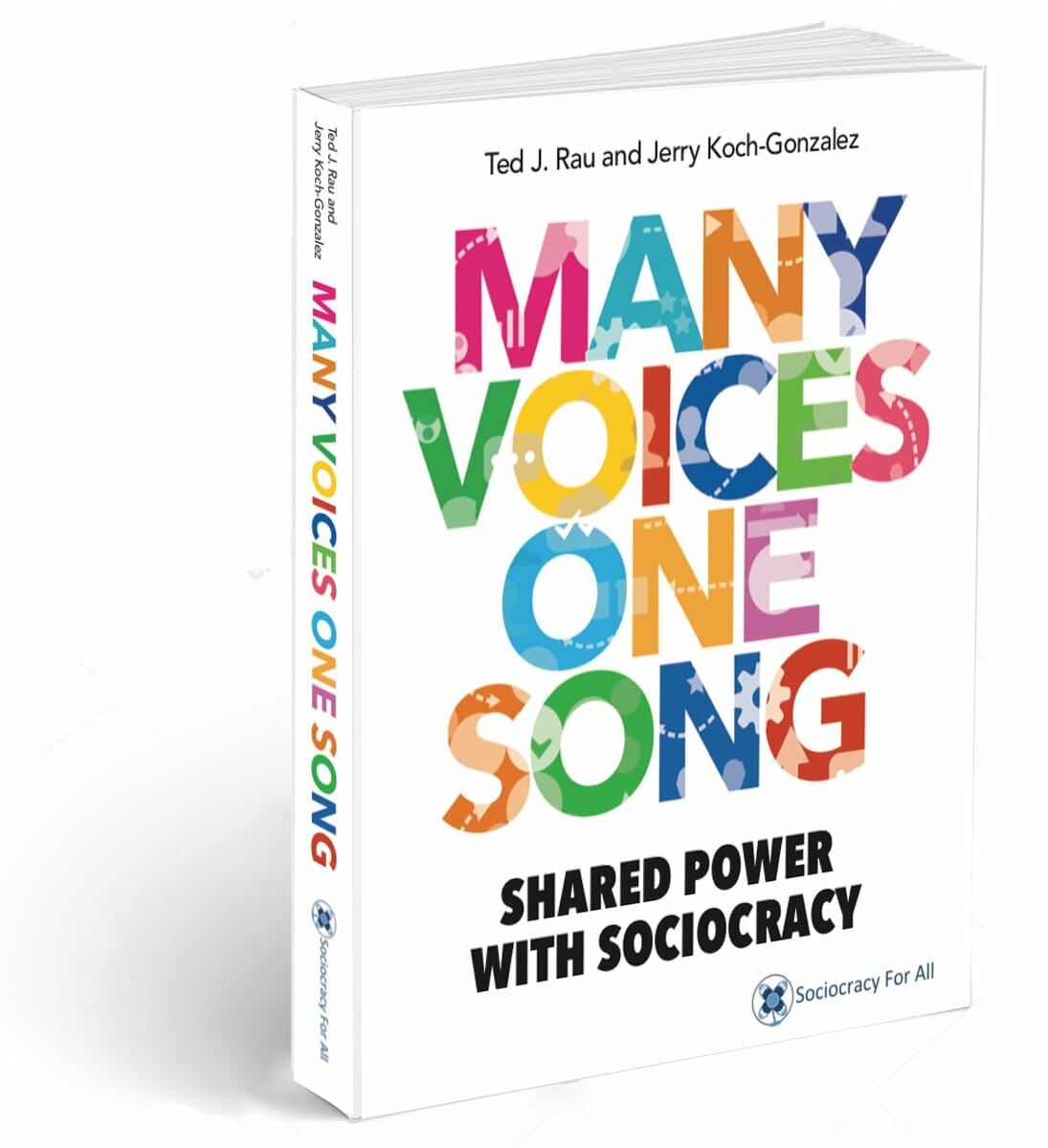
Many Voices One Song
The practical sociocracy handbook written by the co-founders of Sociocracy For All. 300 pages full of real-life support!
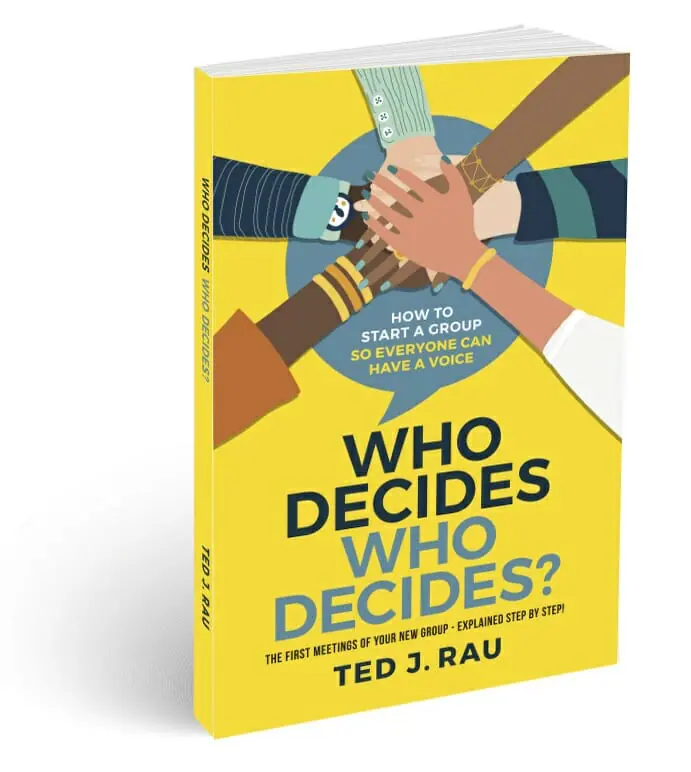
Who Decides Who Decides?
How to start a group so everyone can have a voice!
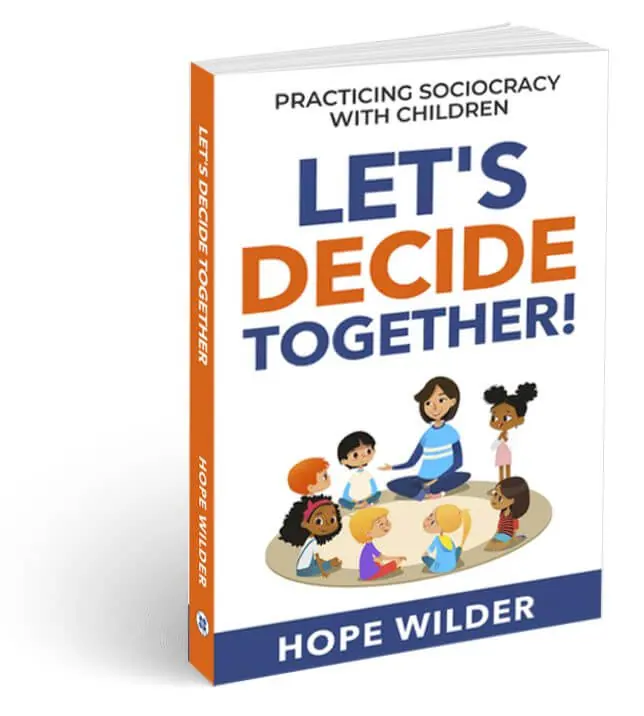
Let’s Decide Together
The definitive guidebook for practicing sociocracy with children. Children can decide with sociocracy too!
Sociocracy topics
Each of these short summaries gives you an overview of the sociocracy resources for you to learn more.




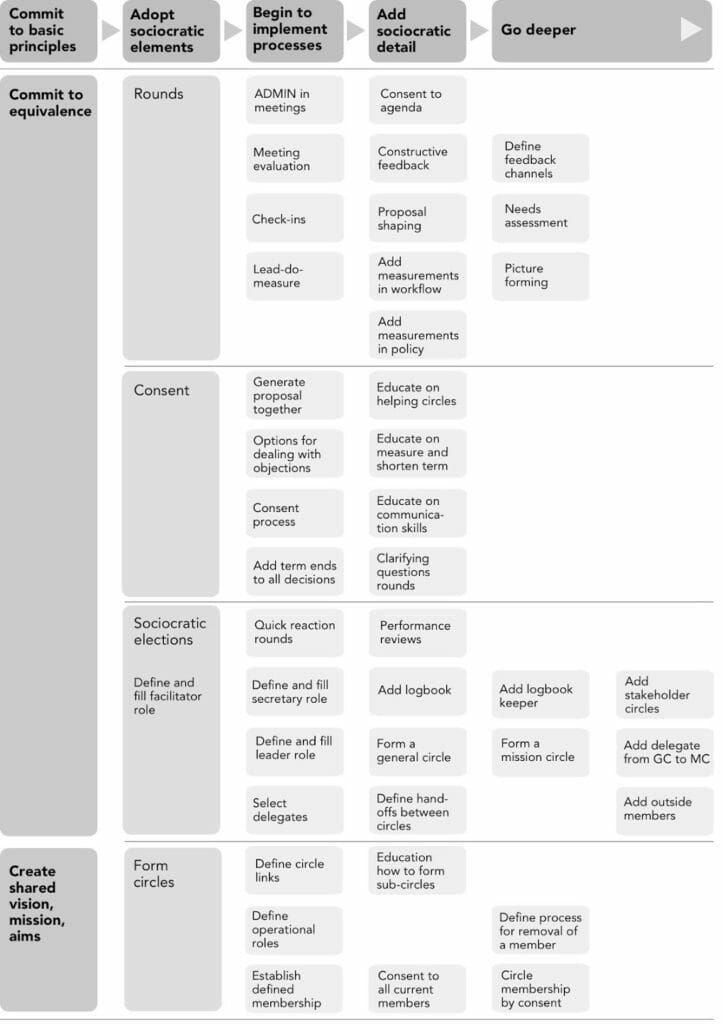
More: Selection process | Writing proposals | Implementation
Making group decisions: consent
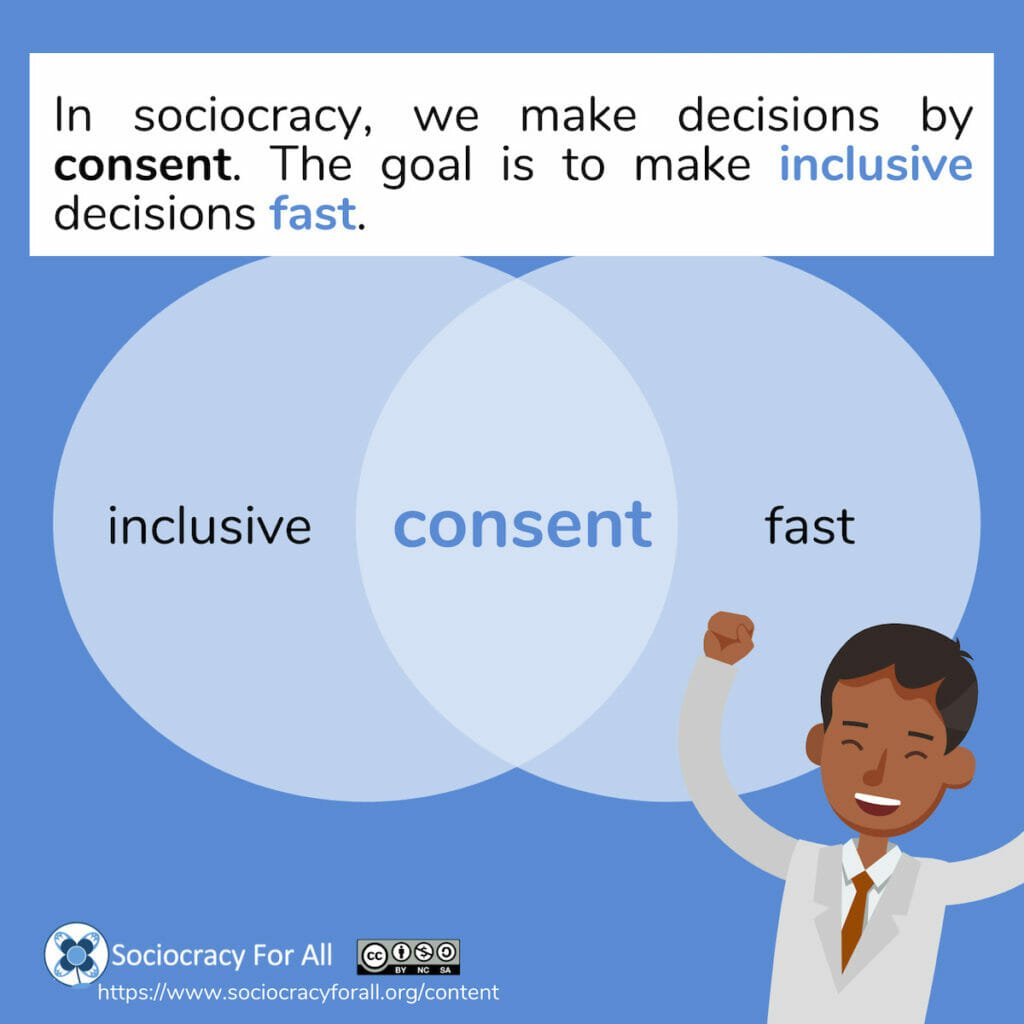
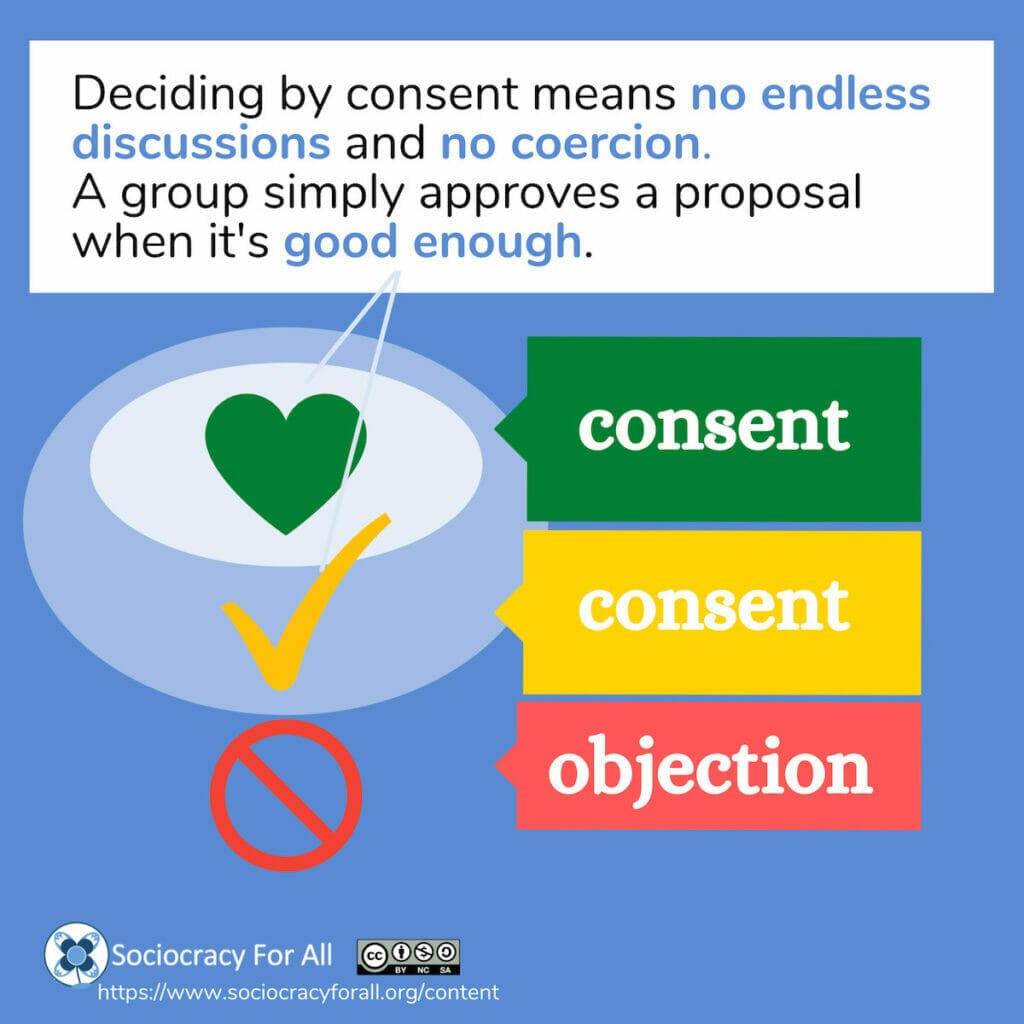
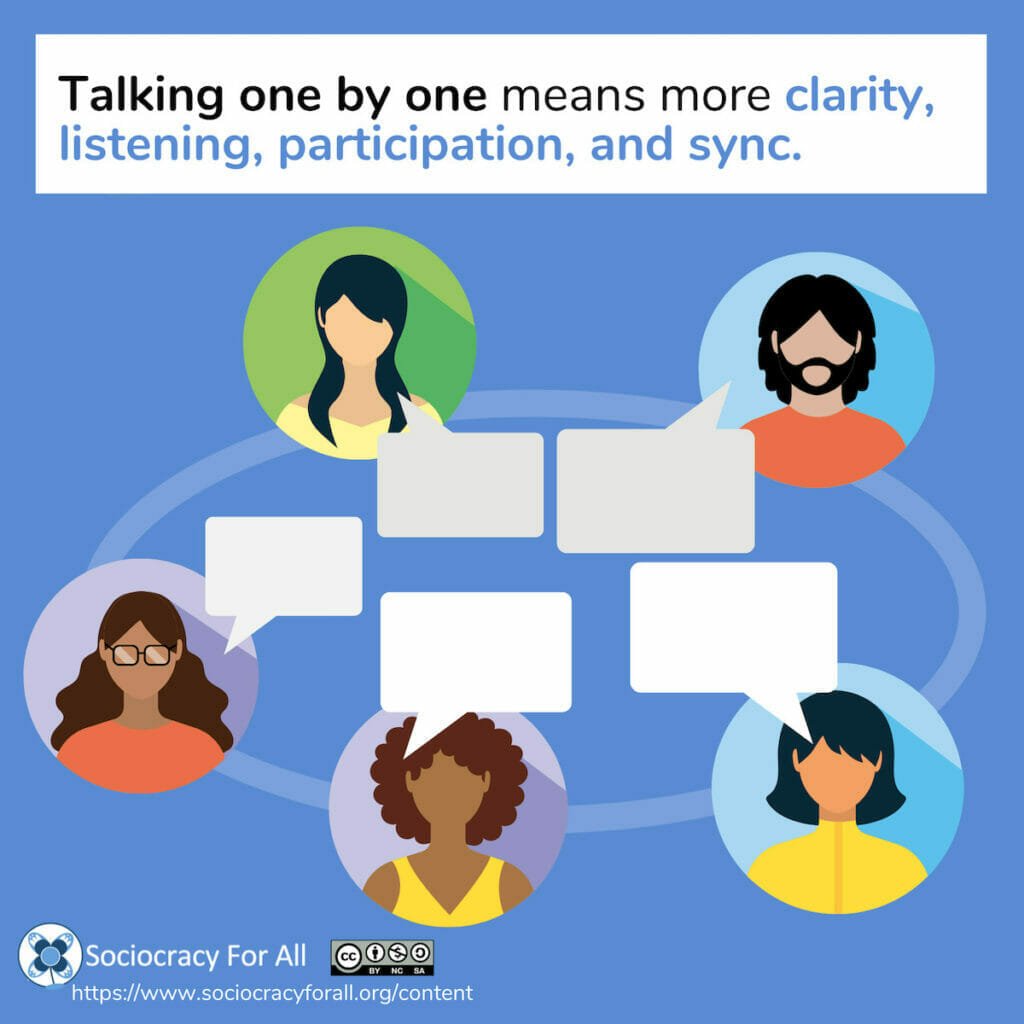
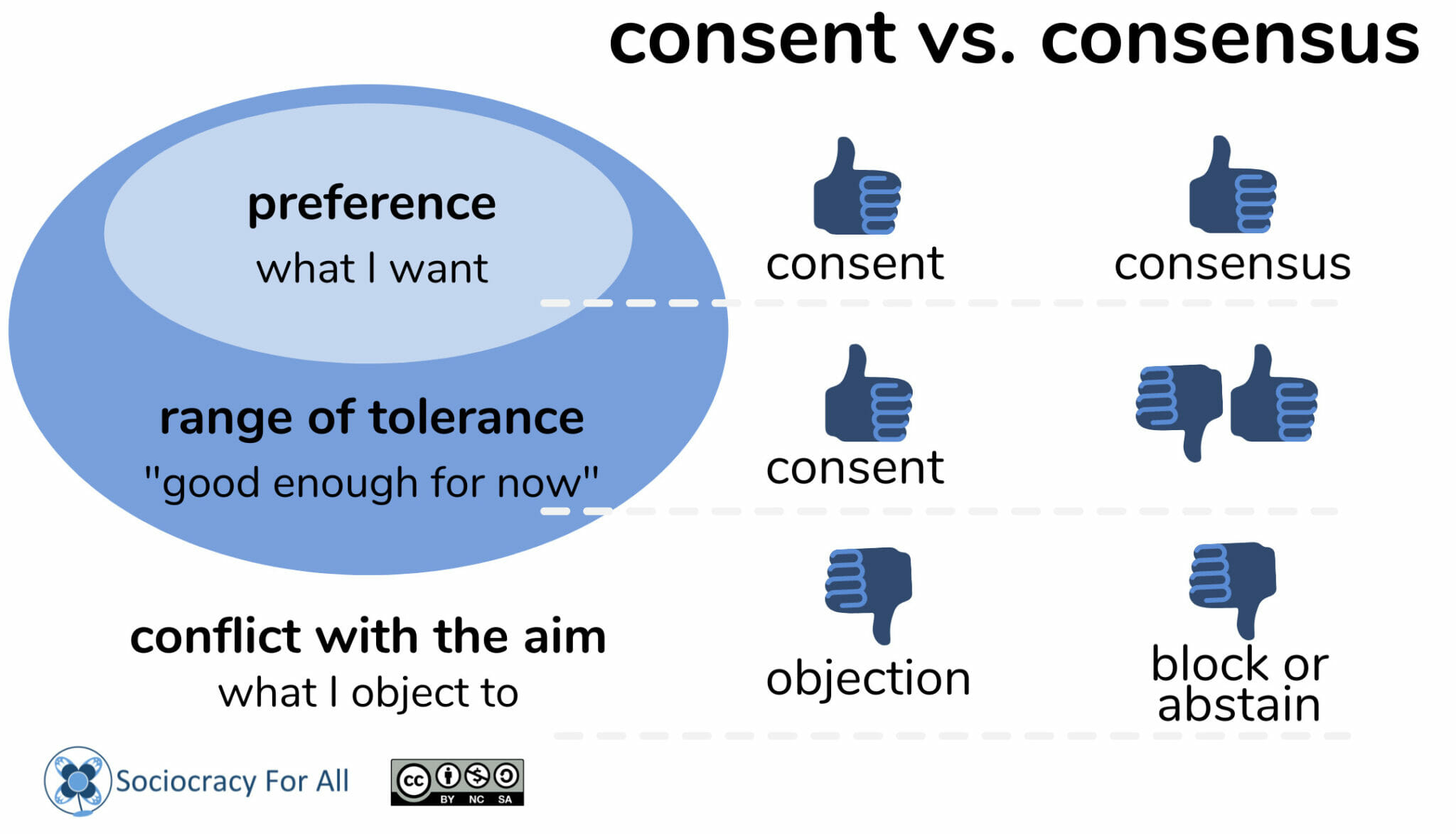
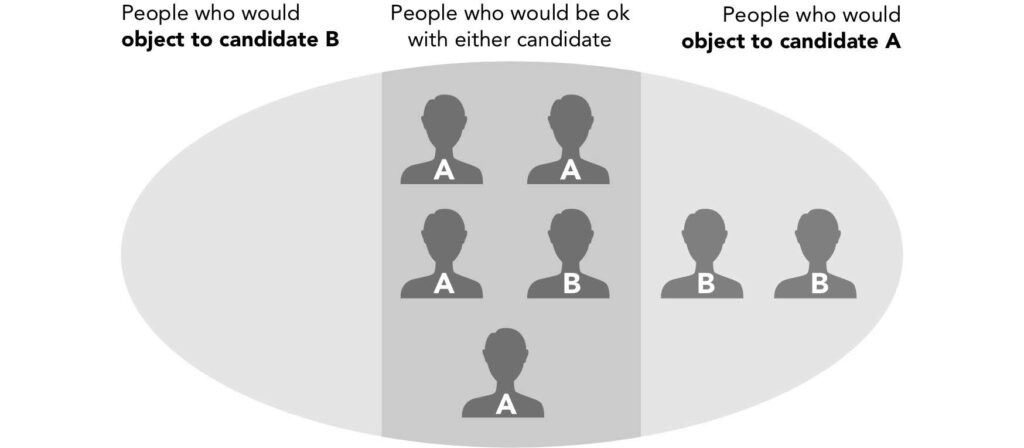
Consent is the default decision-making method in sociocracy. In consent, a decision is made when no circle member has an objection. Every person will consent if they can accept the proposal, and object if the proposal has negative implications with respect to the circle’s shared aim.
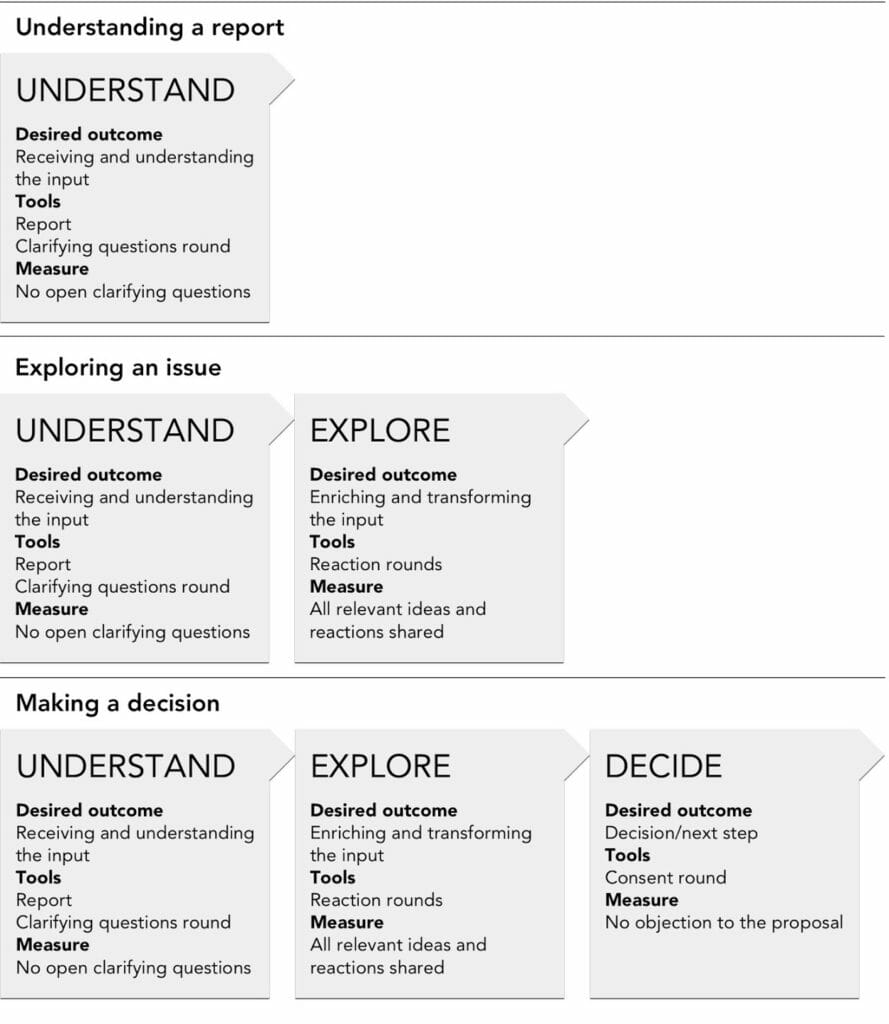
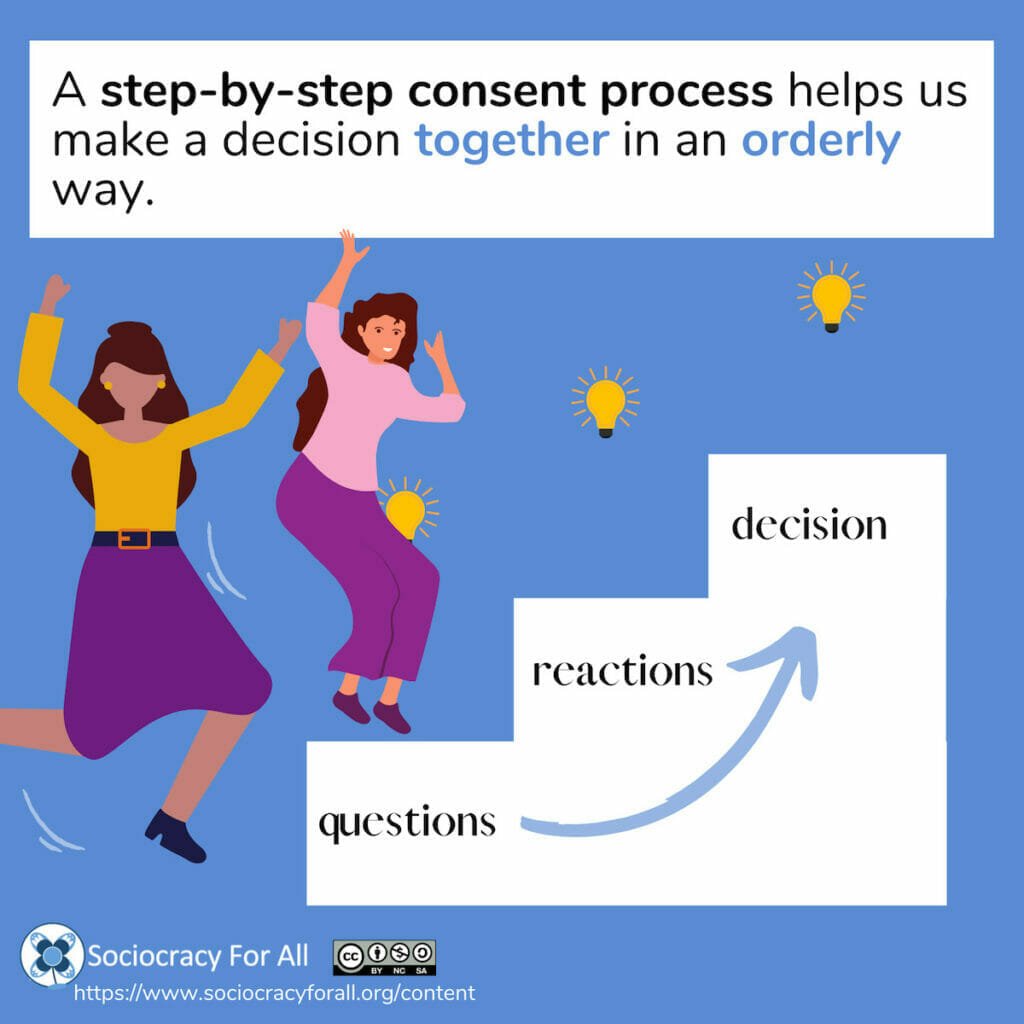
A group moves to consent in the consent process: presenting the proposal and clarifying questions, quick reactions and a round of consent/objections.
Different from blocking a proposal in consensus decision-making, objections are welcomed as valuable information and they can be integrated by modifying the proposal, its term or its measurements.
Explore the language of consent.
Deepen your understanding by viewing the Visual Thesaurus map for Consent

Circles and roles: who decides what?
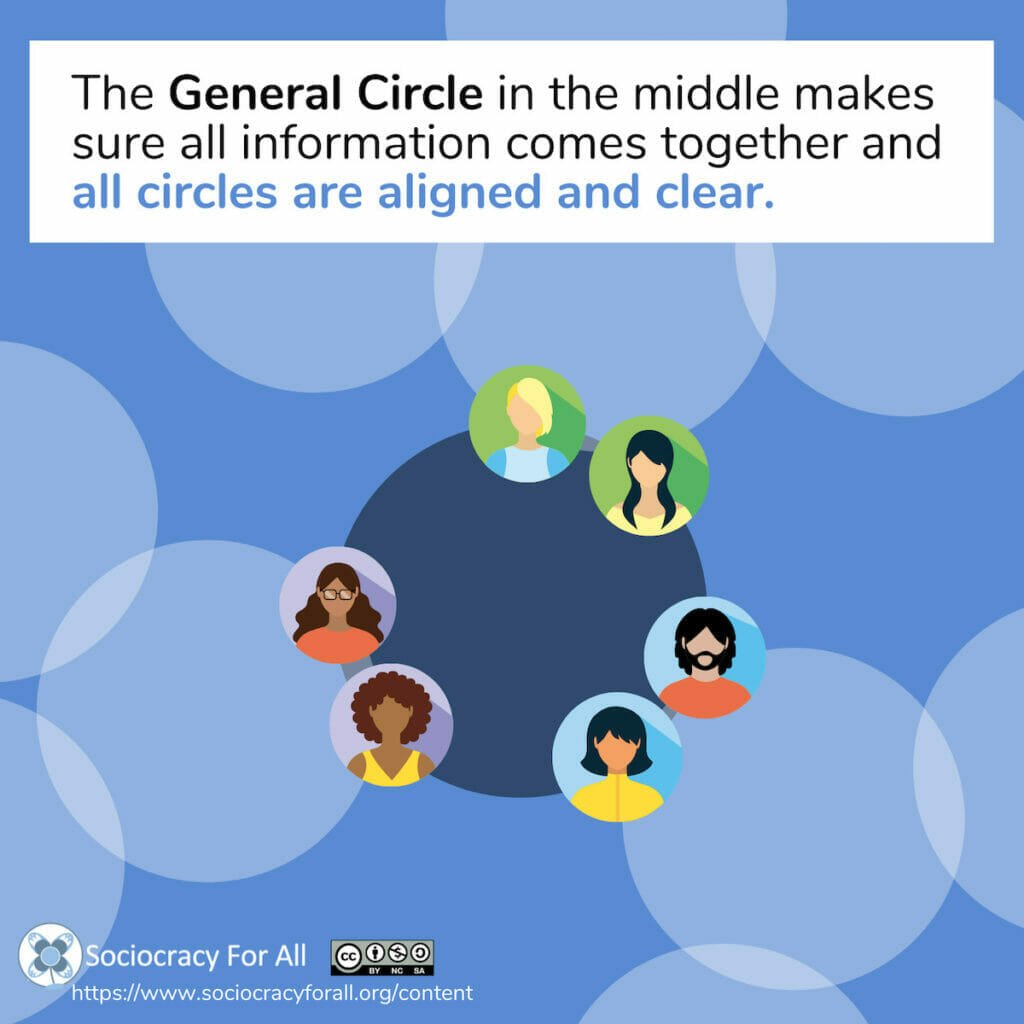
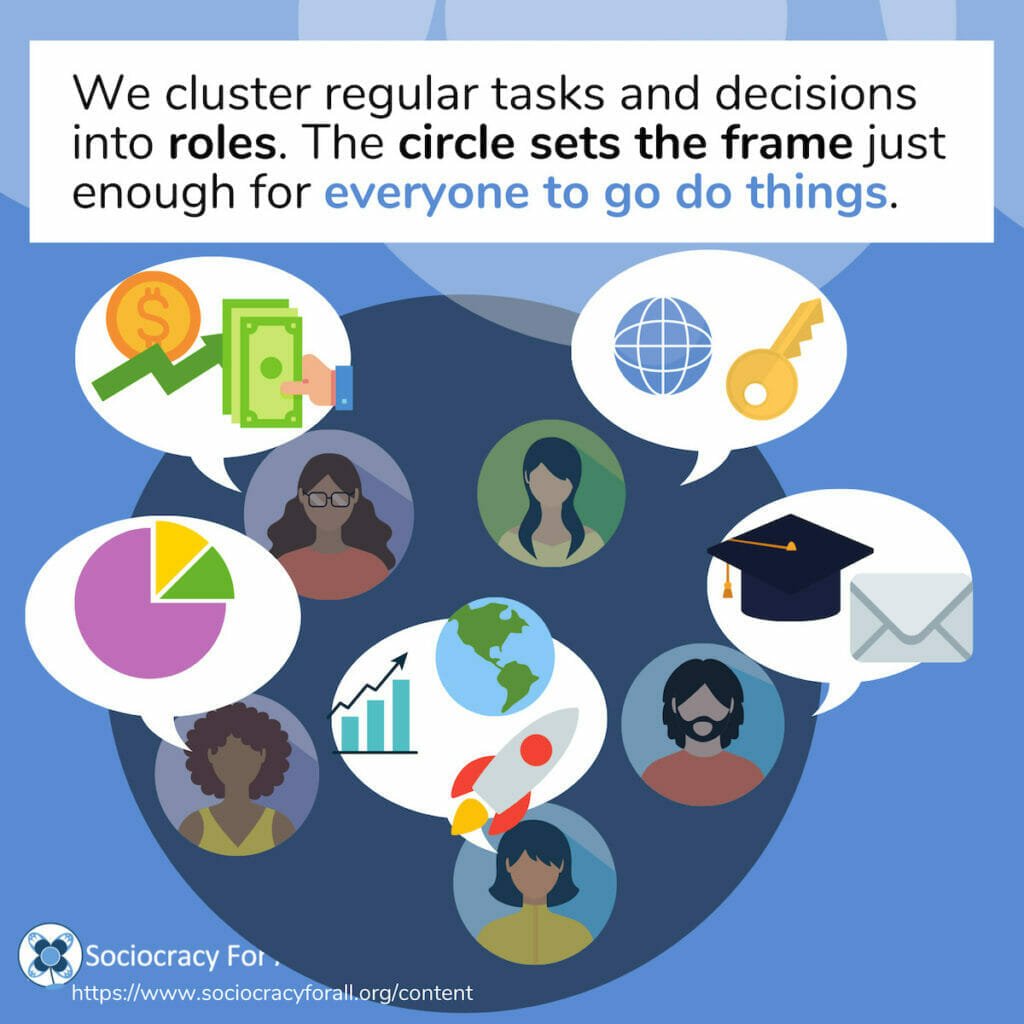
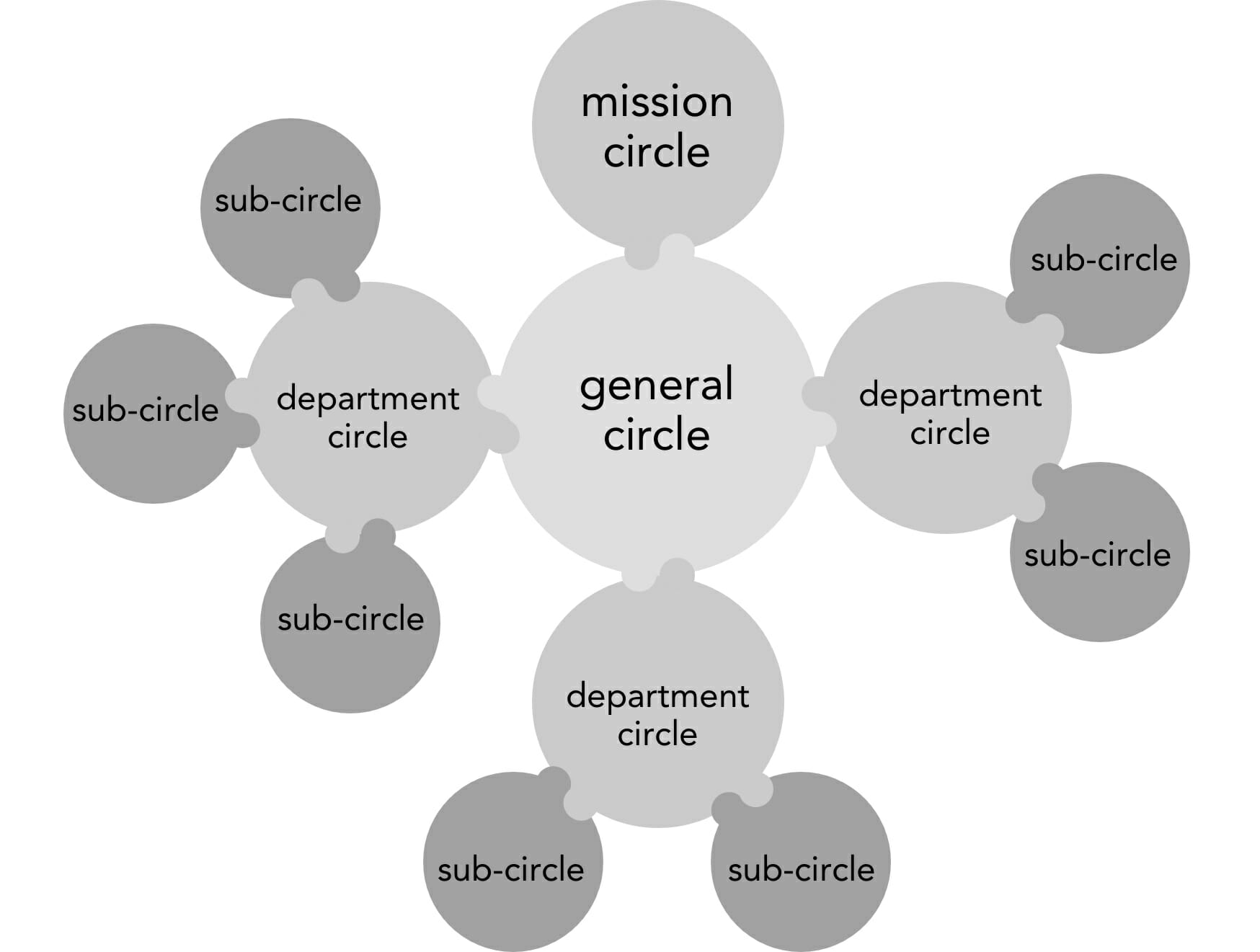
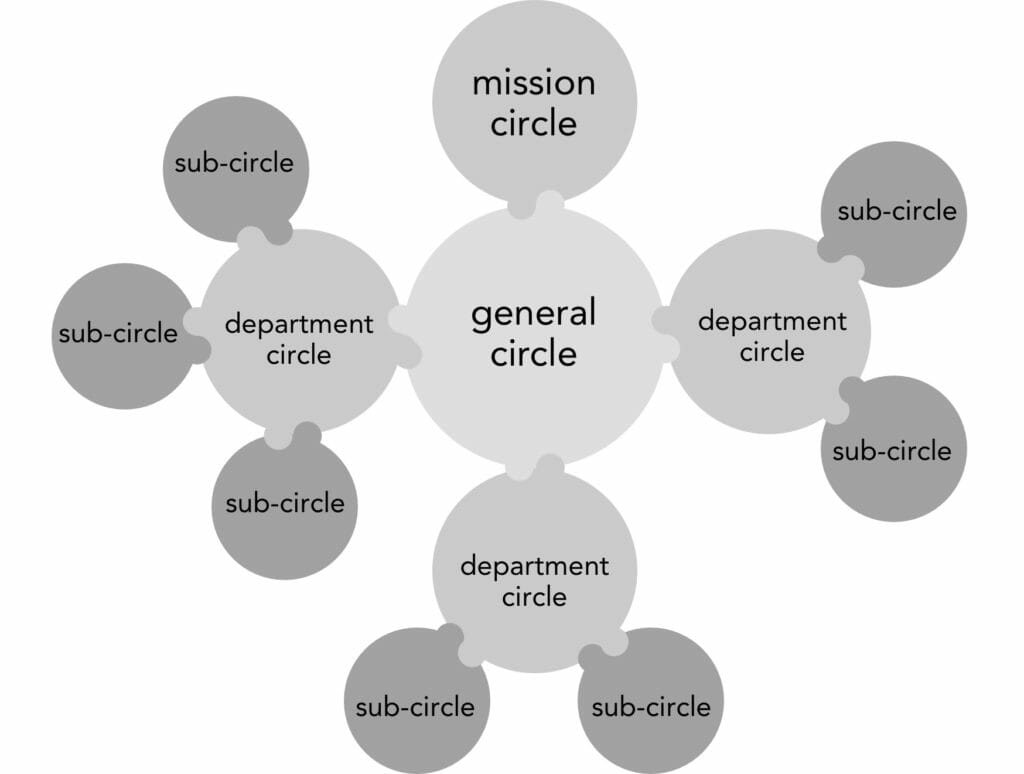
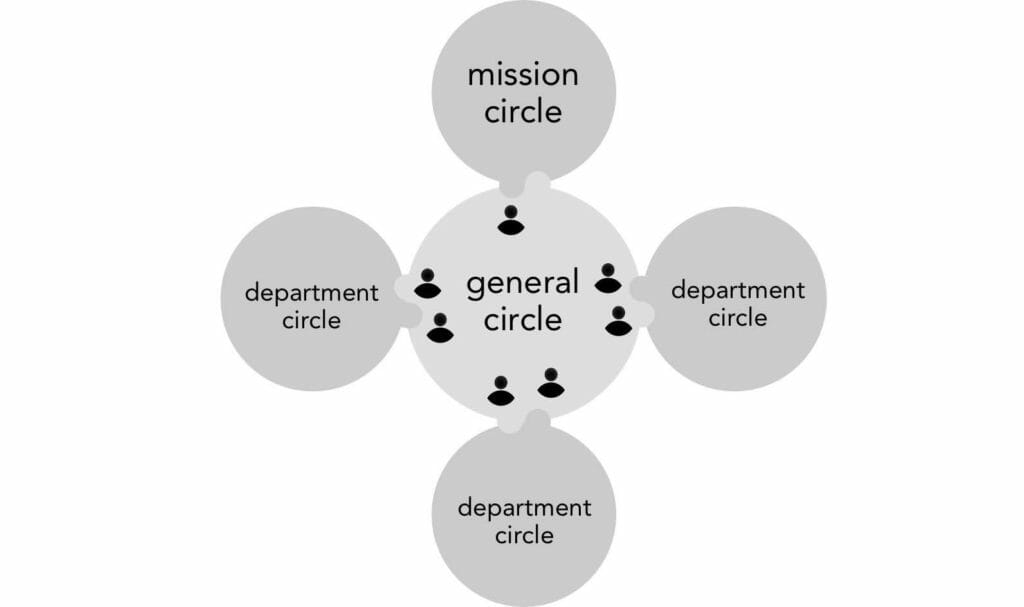
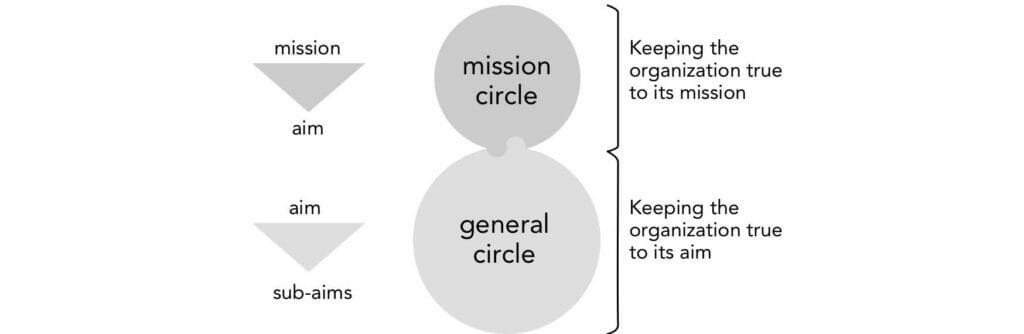
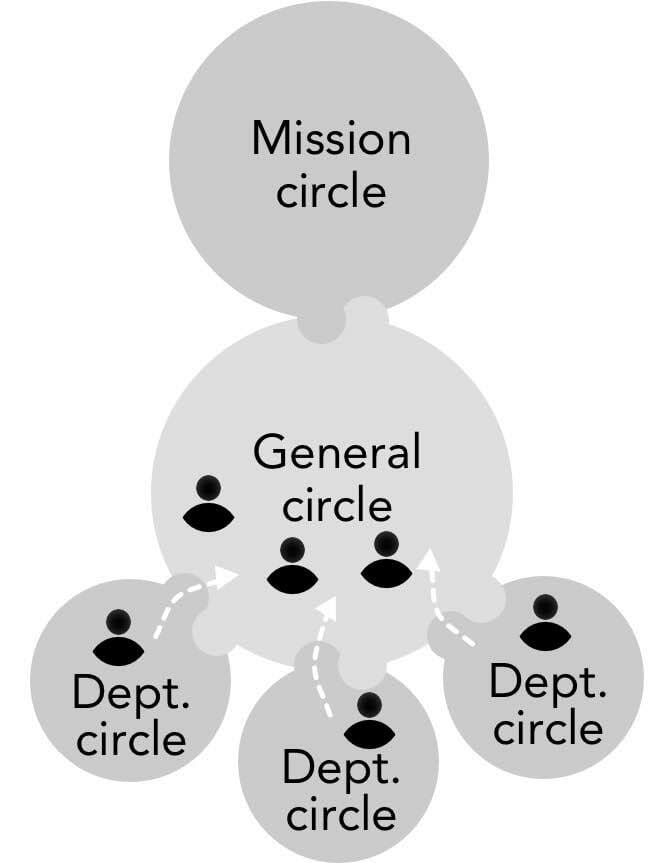
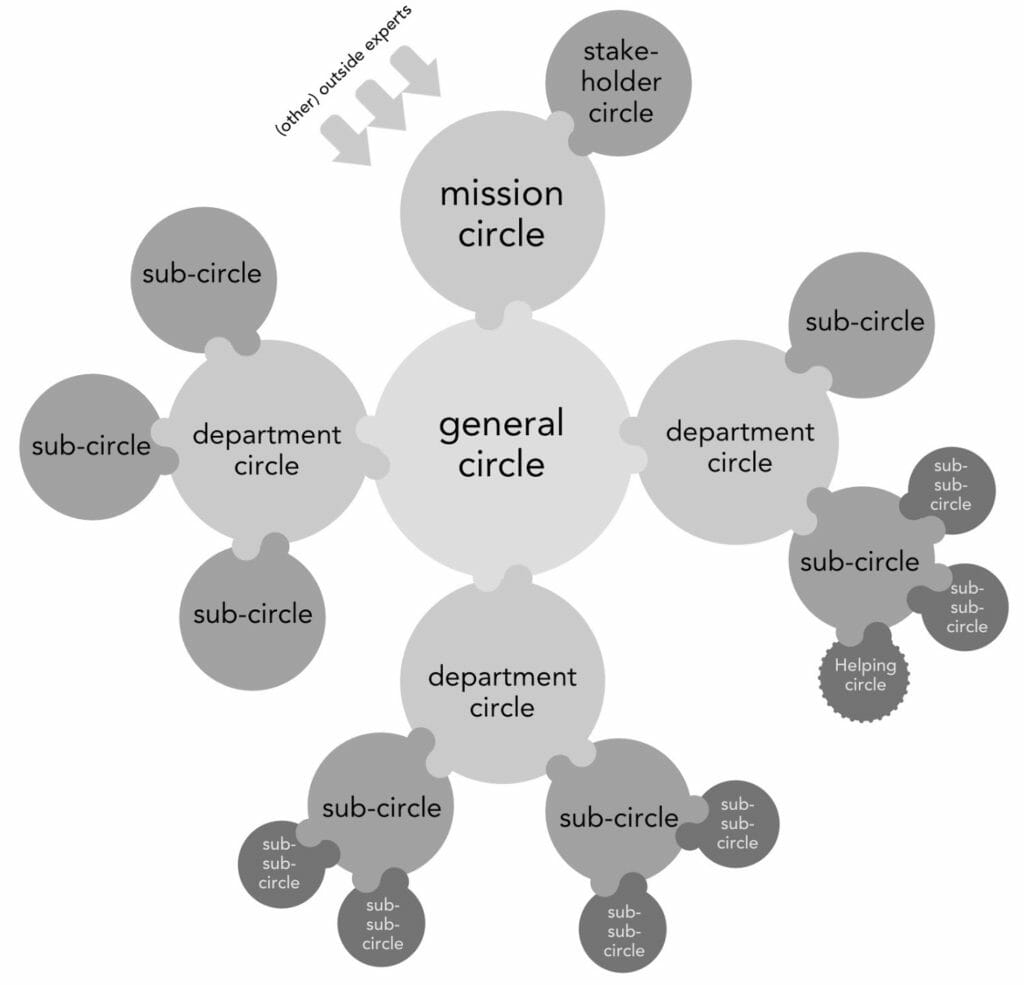
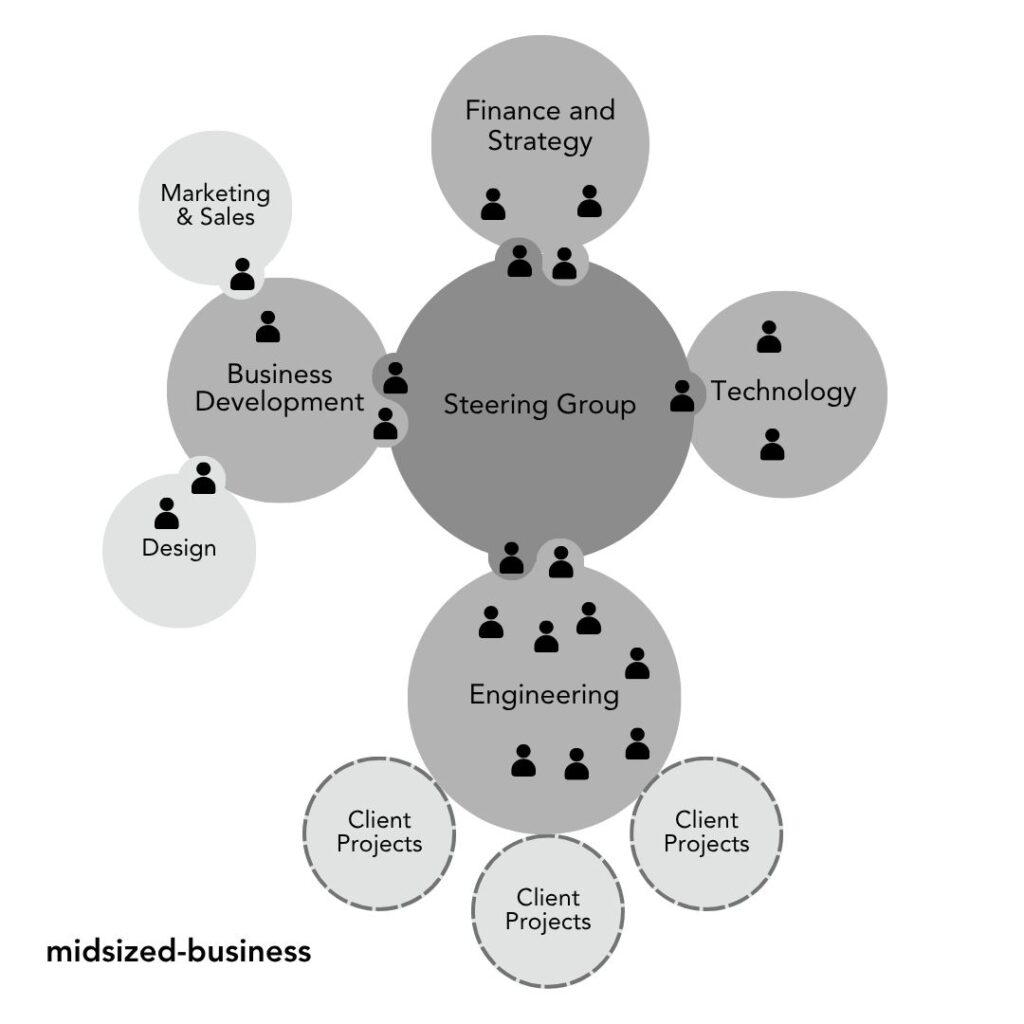
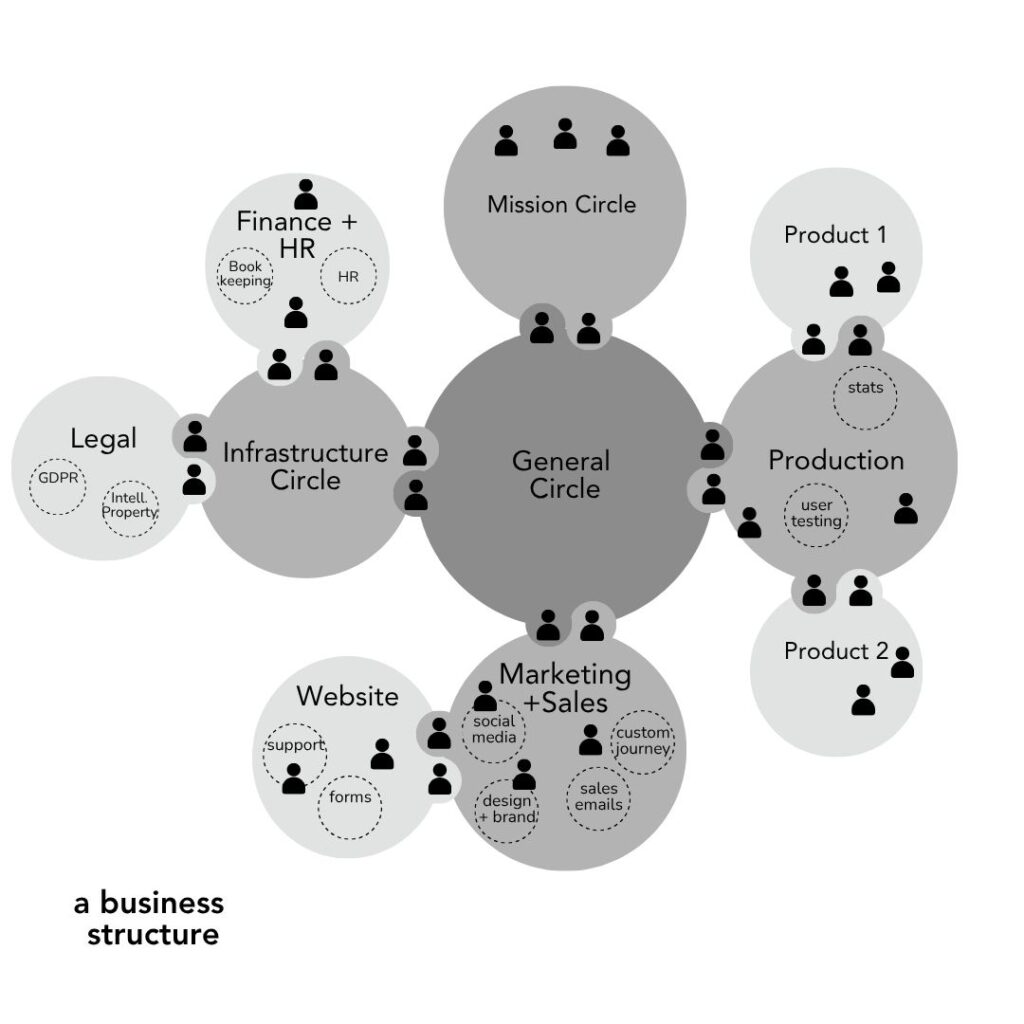
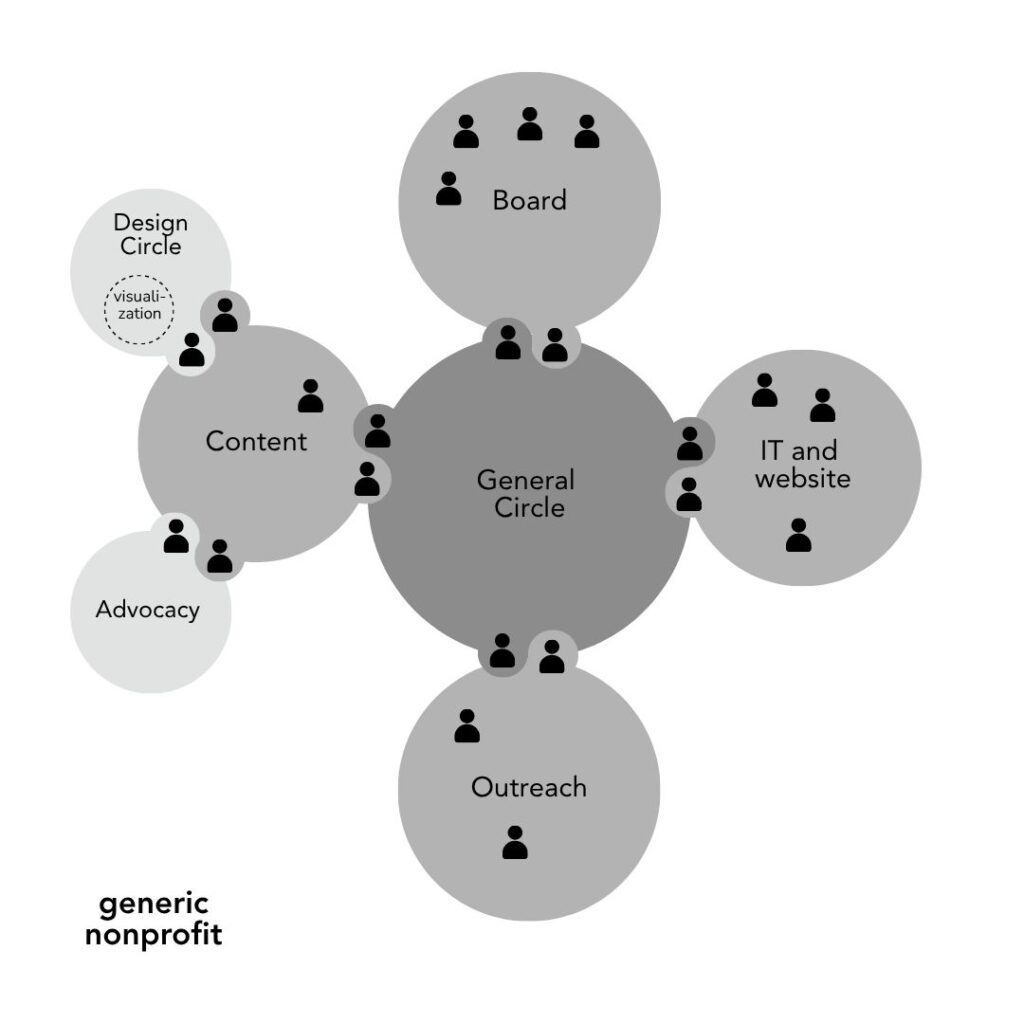
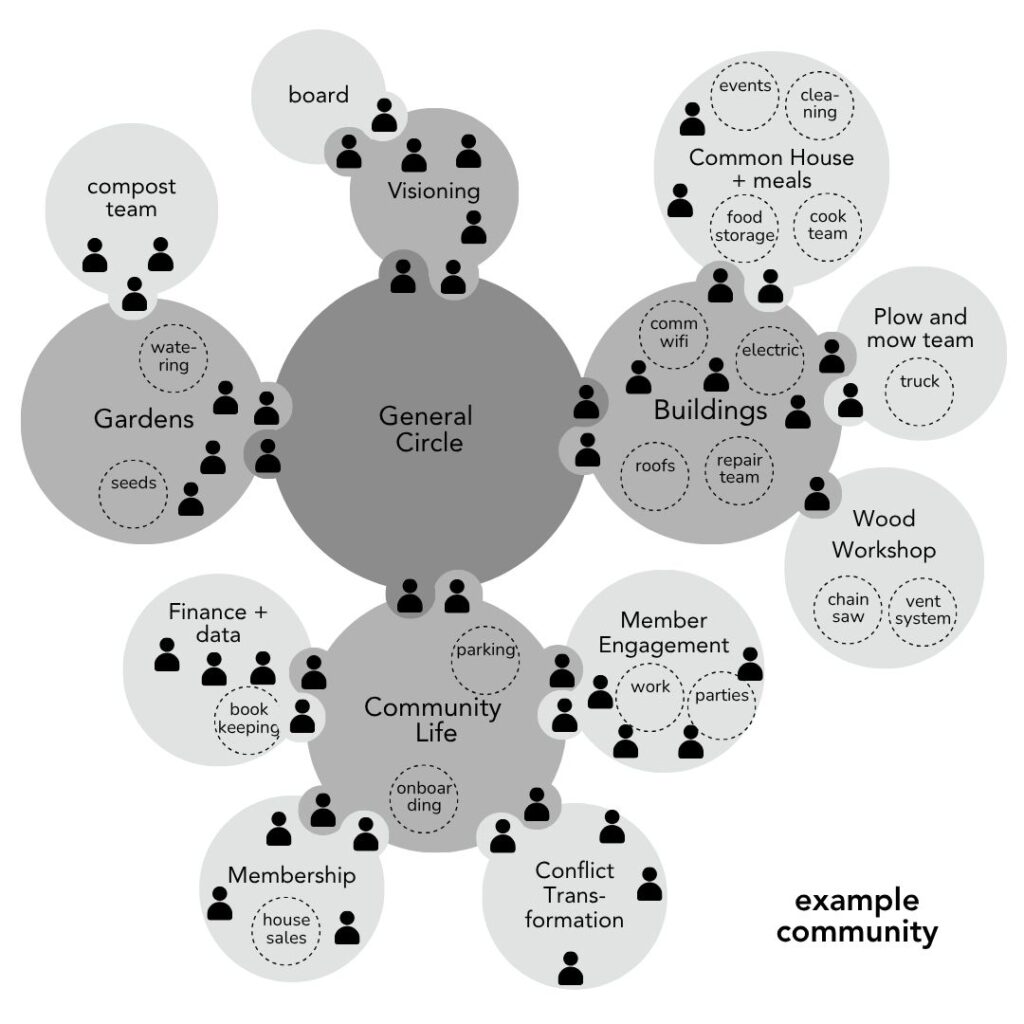
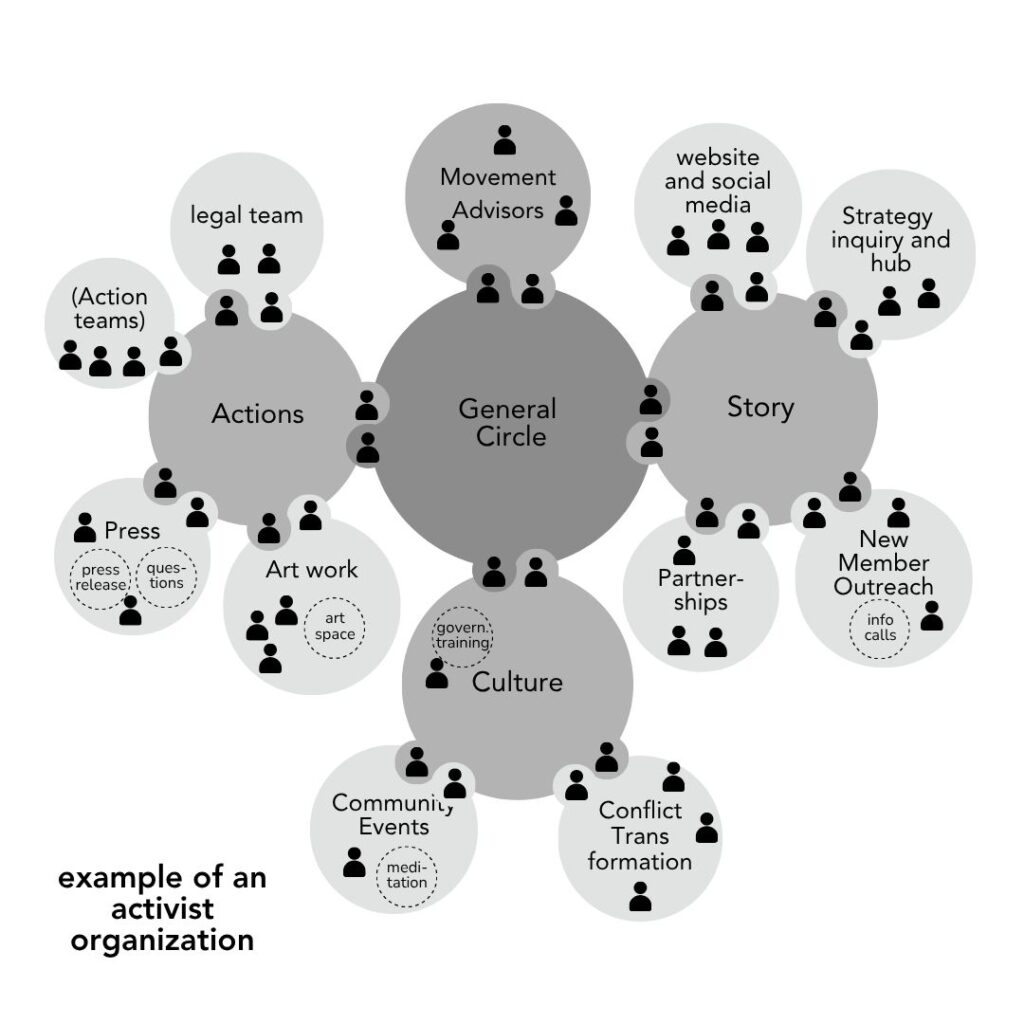
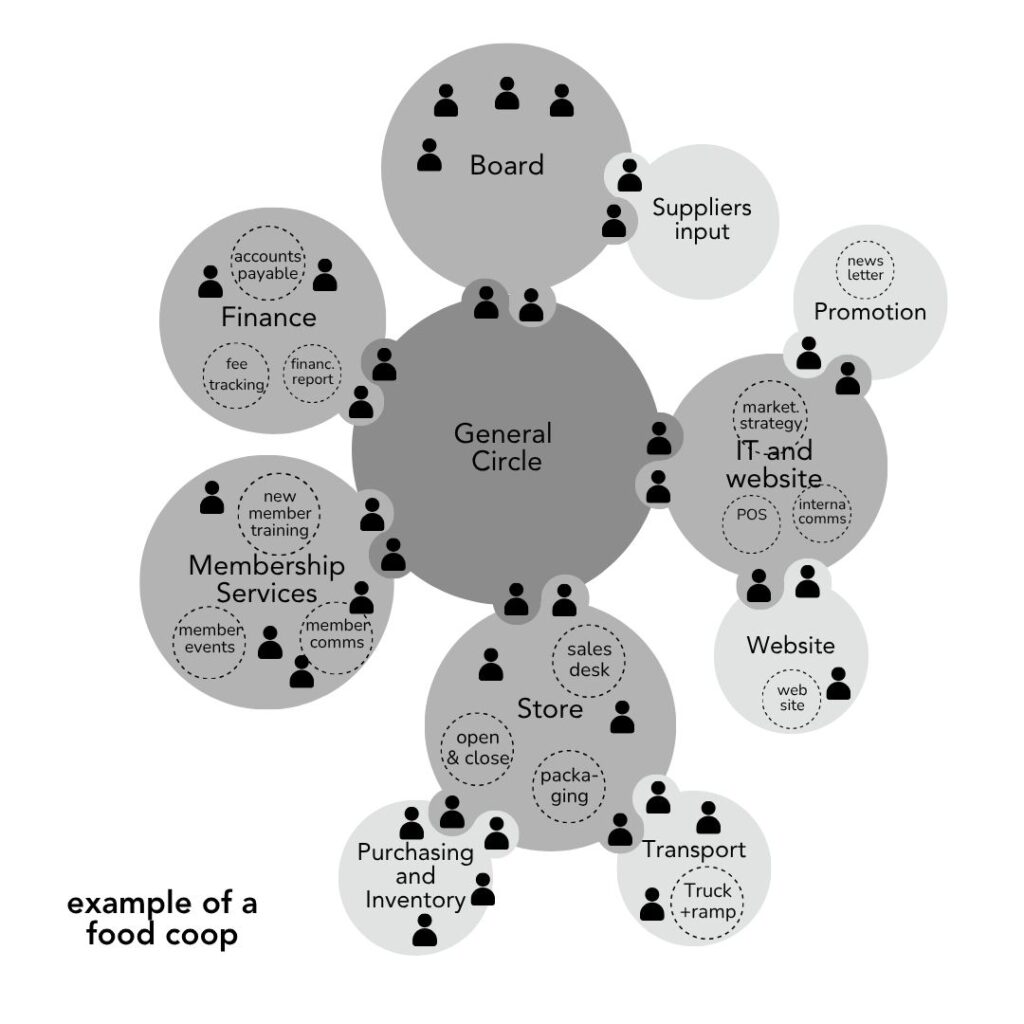
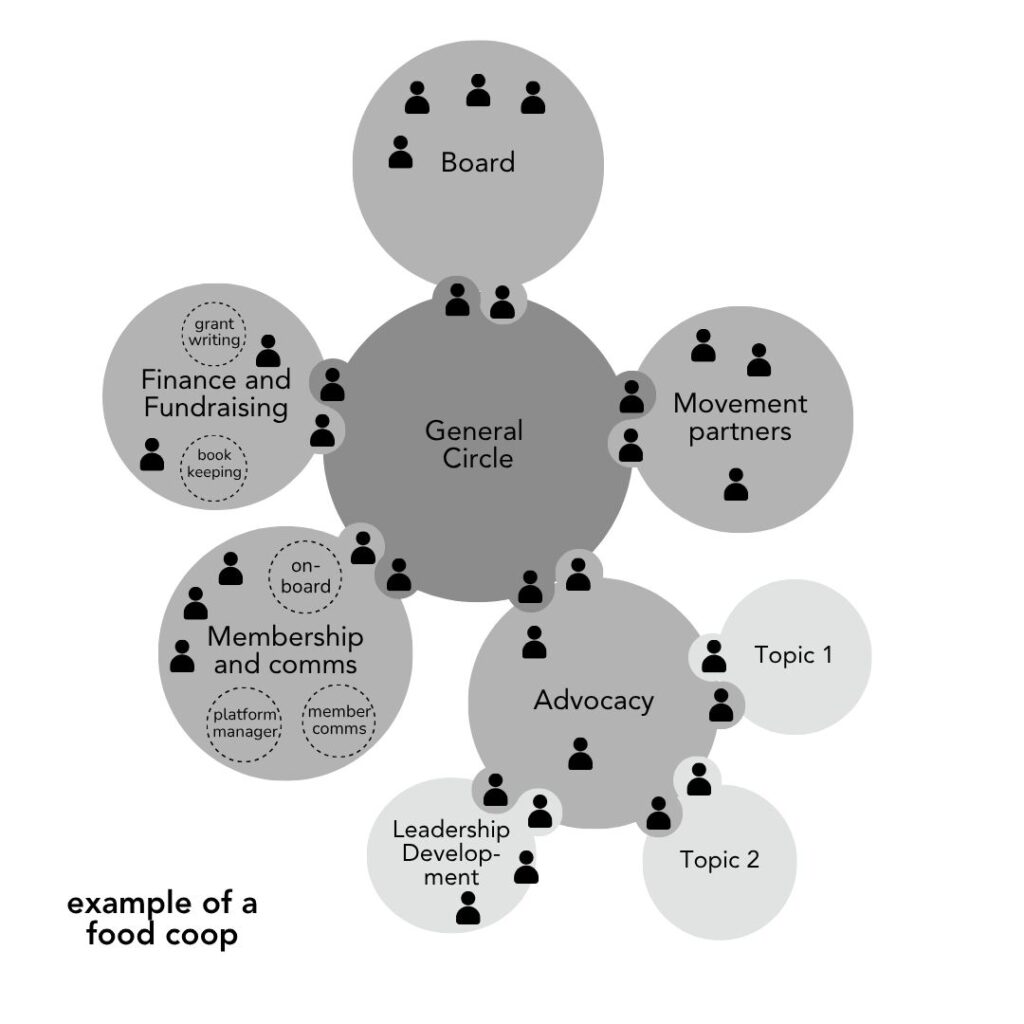
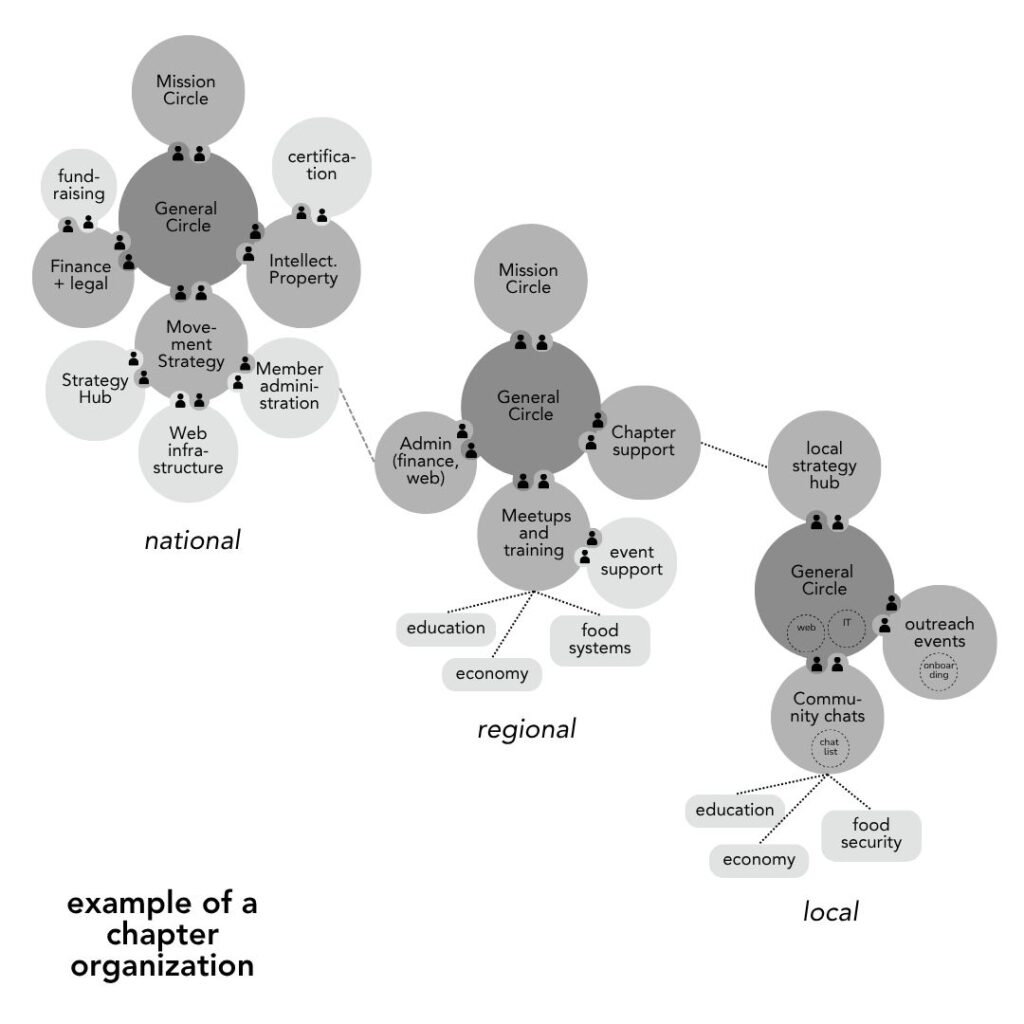
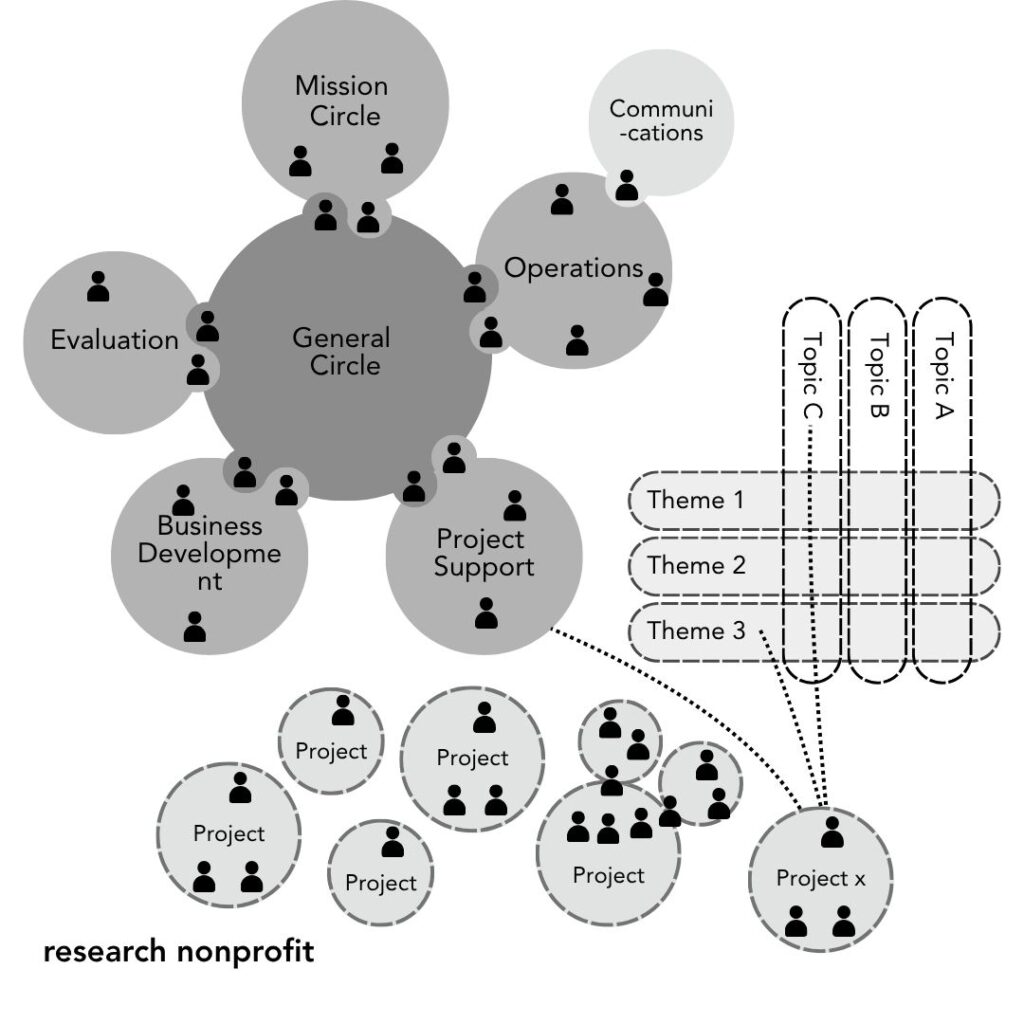
Decisions are made in circles, a defined team of people working together towards their circle’s aim. Circle members make collective policy decisions in their domain and they define operational roles to empower individuals to take on responsibility and circle roles to self-manage their circle.
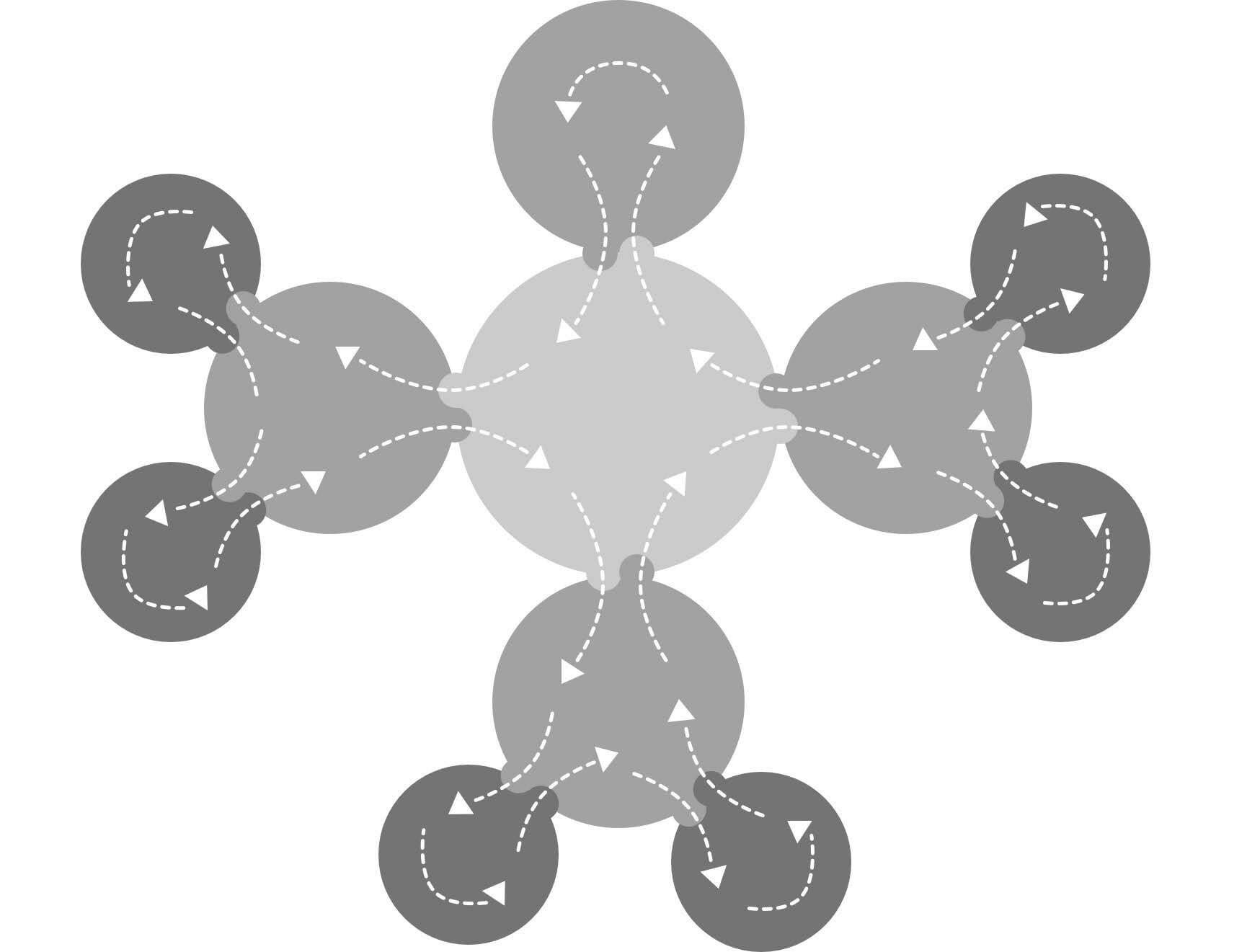
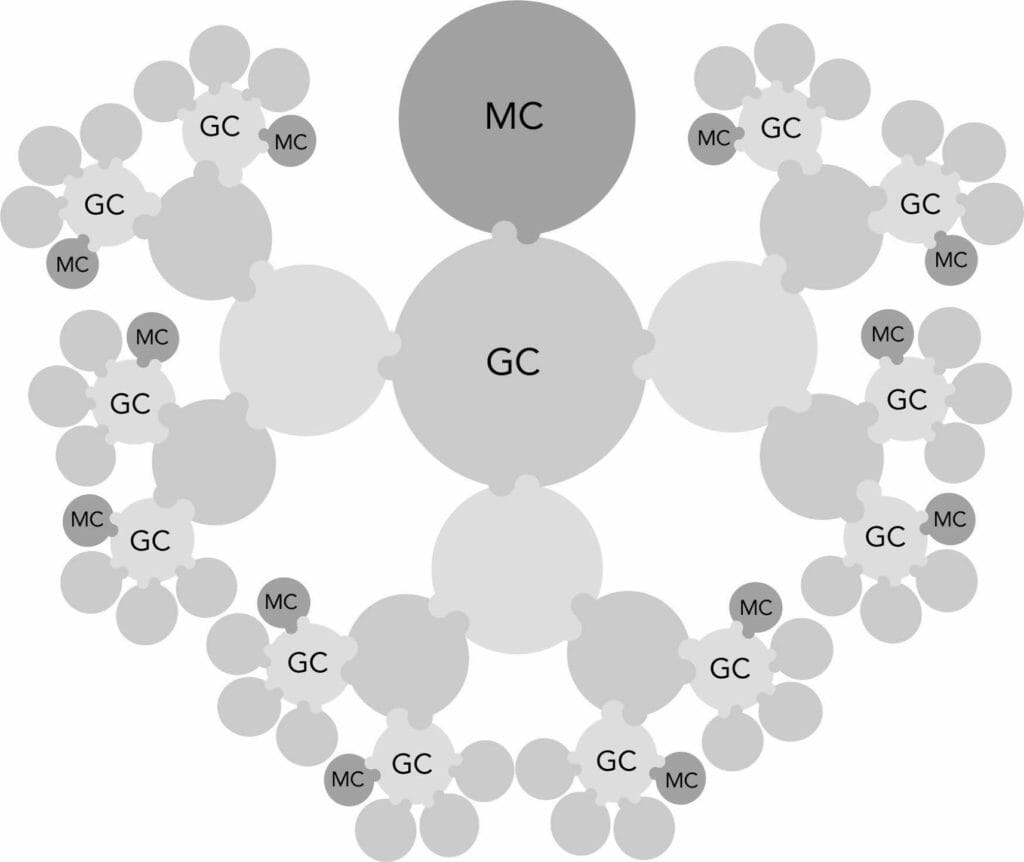
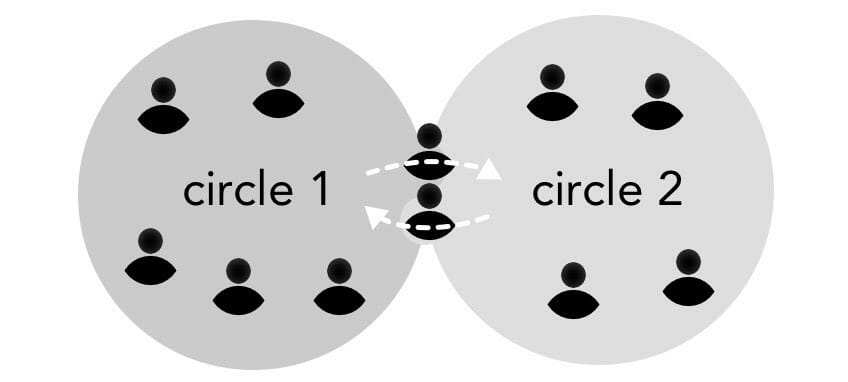
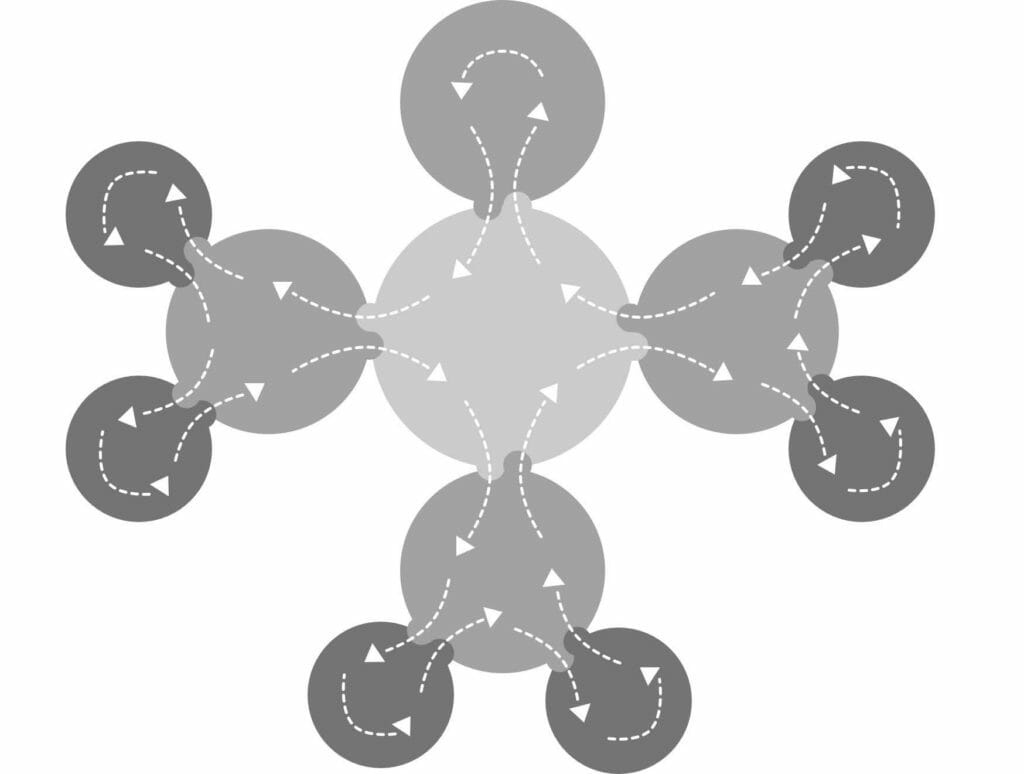
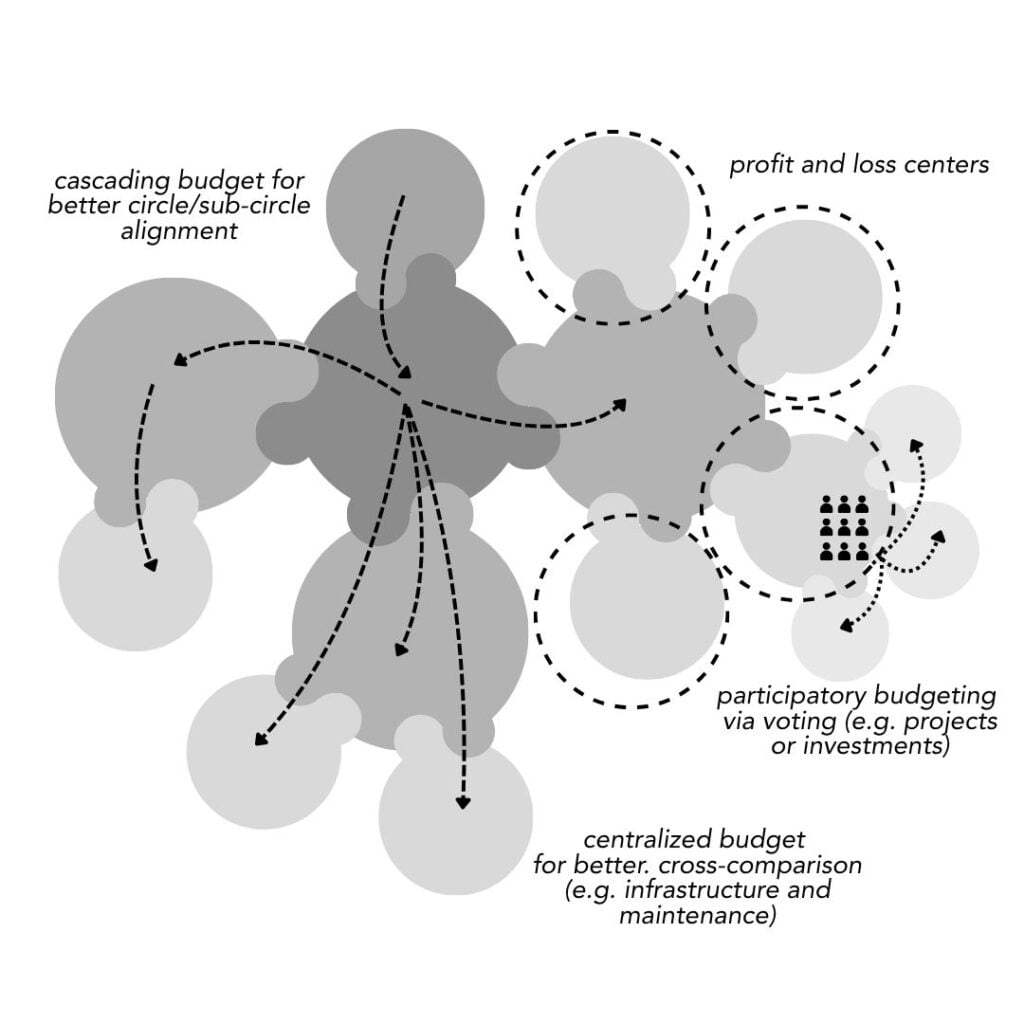
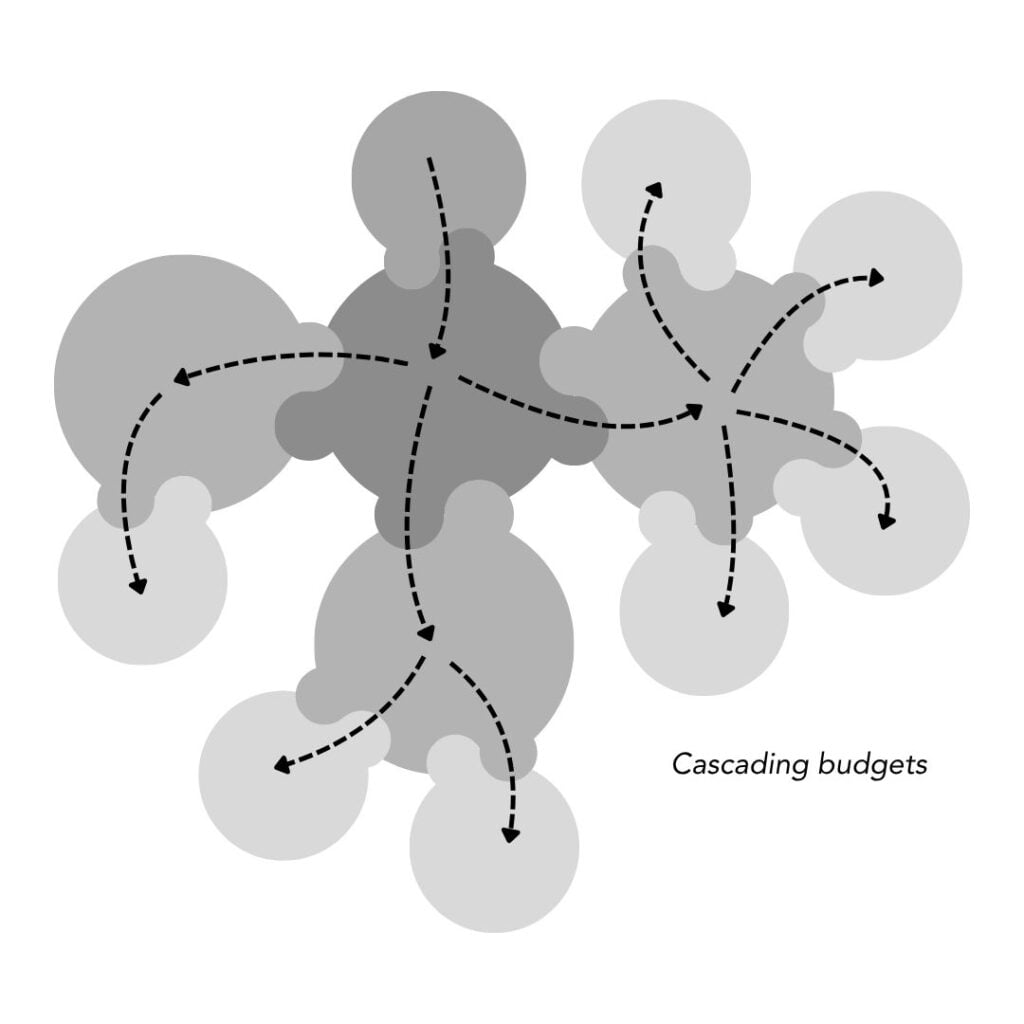
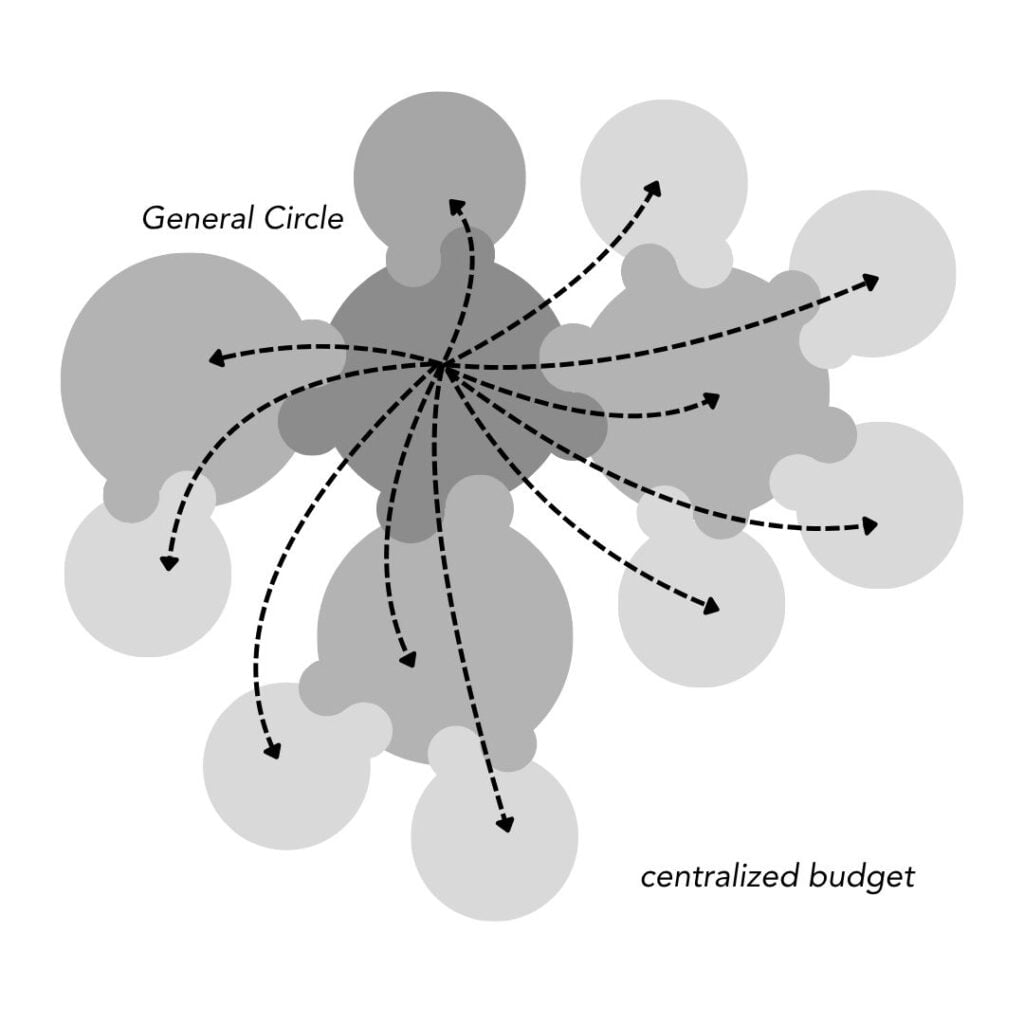
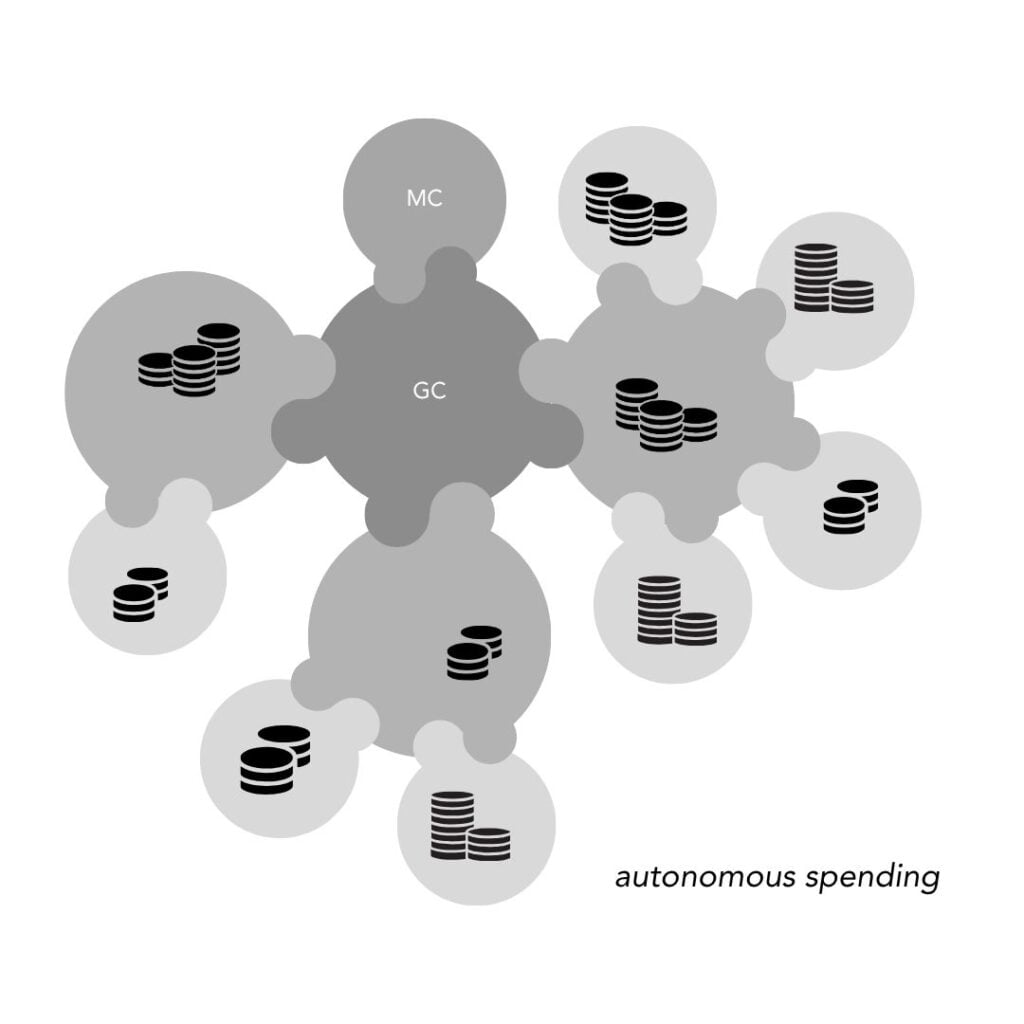
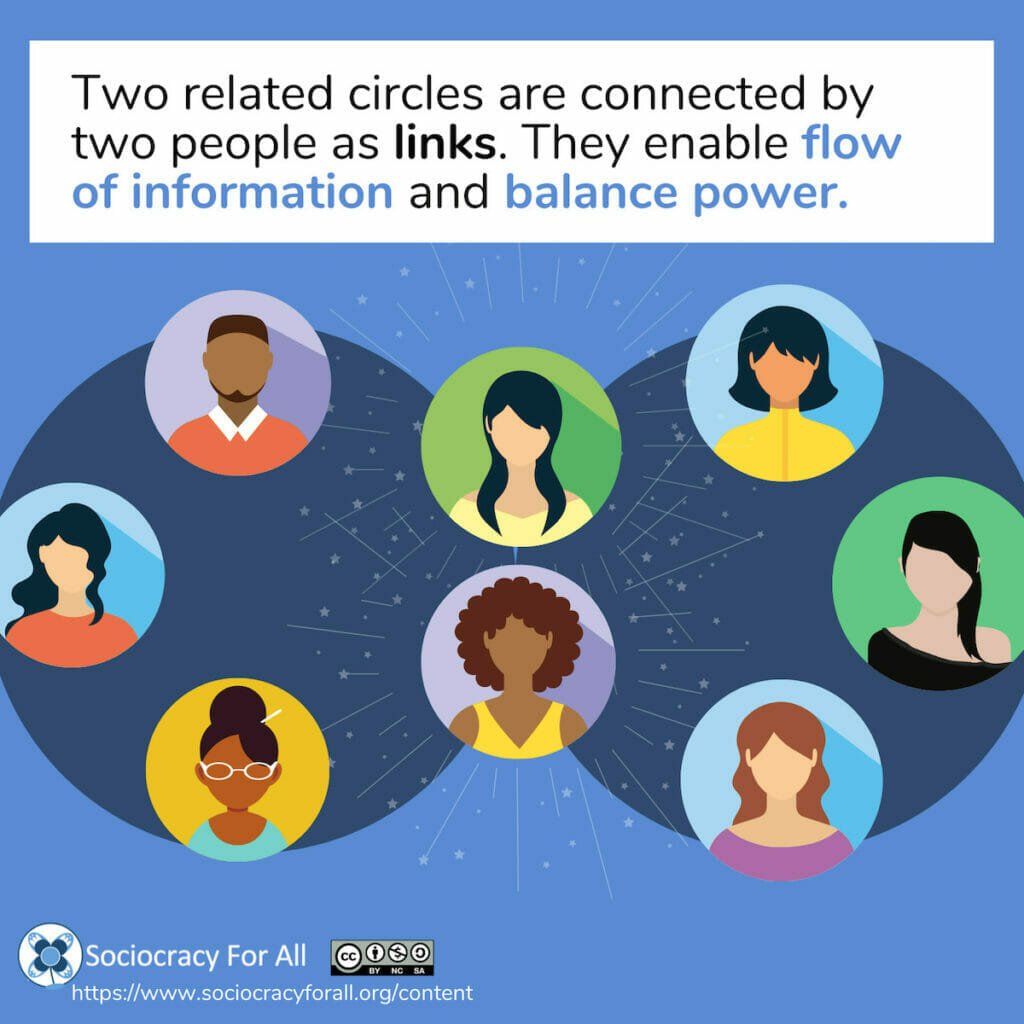
Circles are connected through parent circle/sub-circle relationships of nested domains, leading to a system where everything can be decided locally in the system, without centralizing power at the center. To make sure two circles are connected, we double-link them with two people as members in both circles.
Sociocracy resources on structure: Overview article on structure
Explore the language of circles and roles.
Deepen your understanding by viewing the Visual Thesaurus map for circles and roles.
Meetings with sociocracy
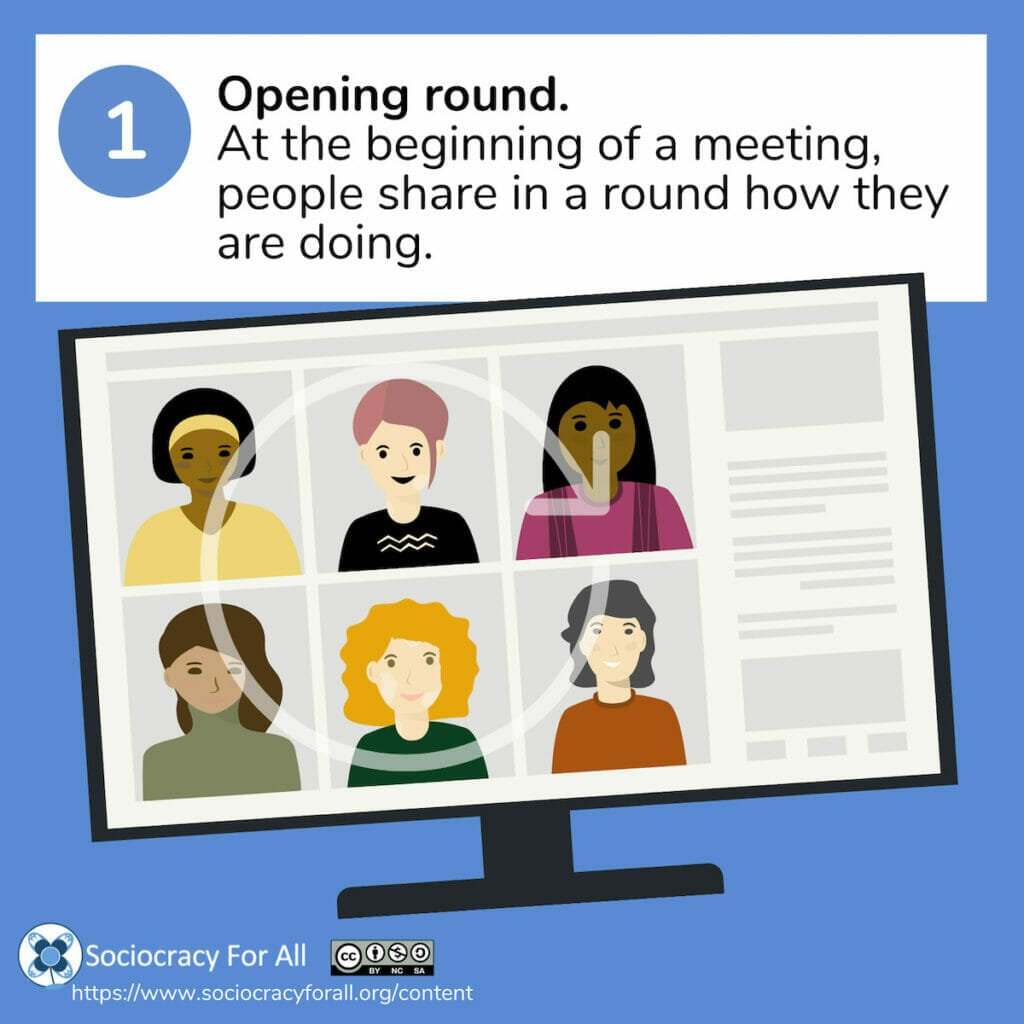
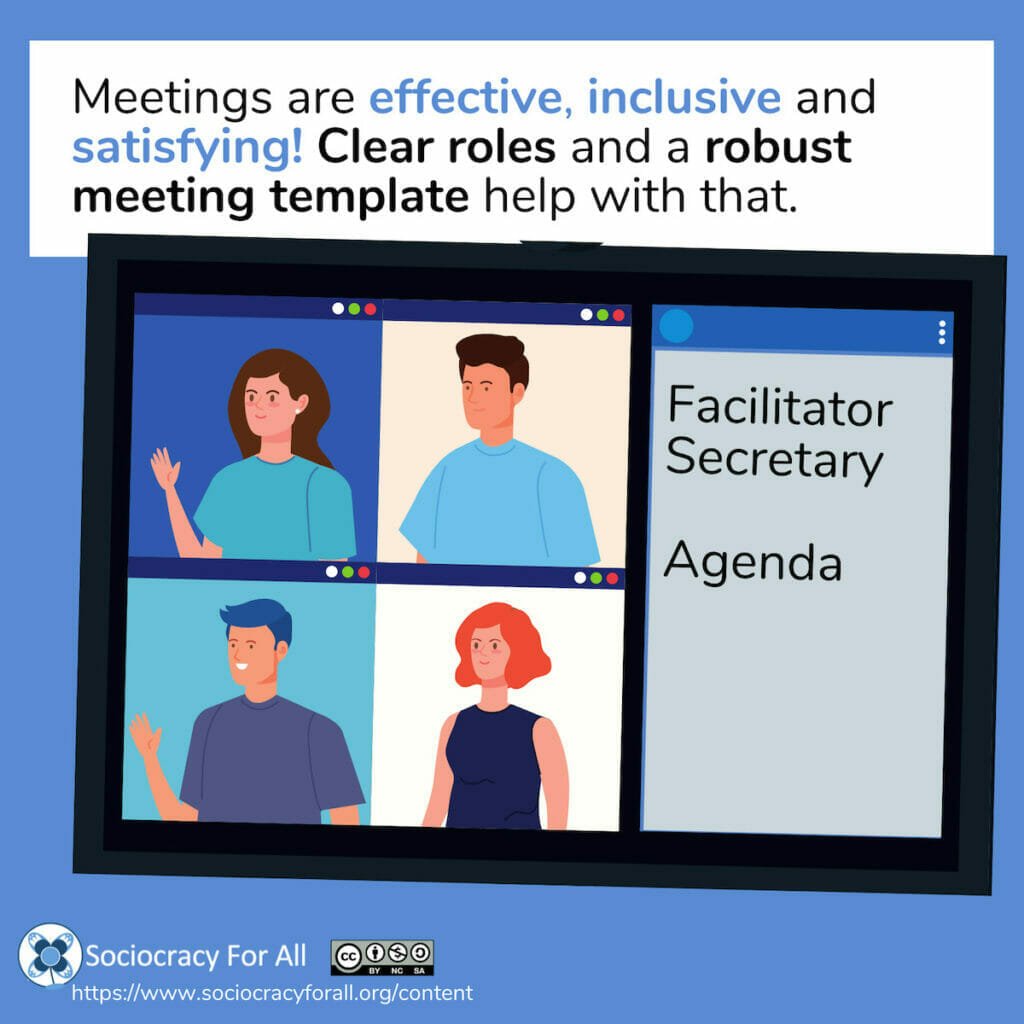
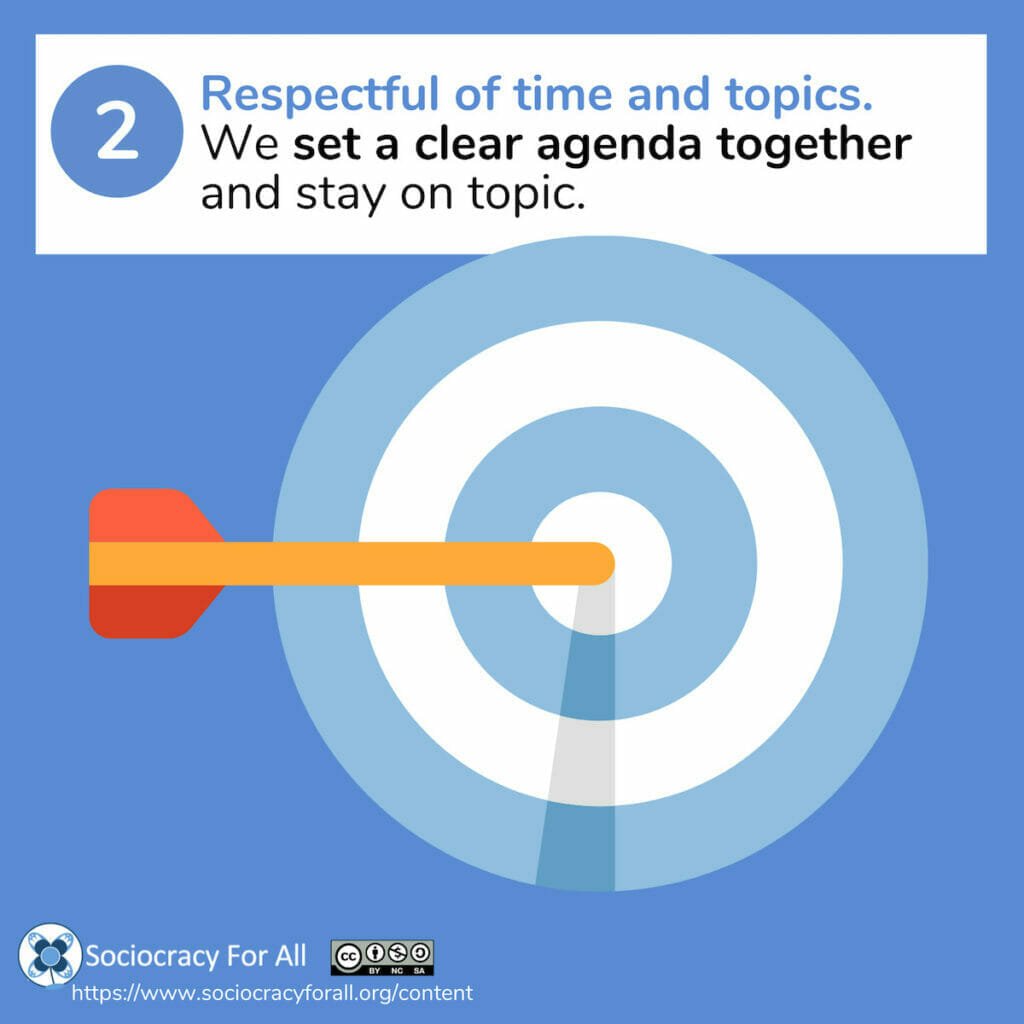
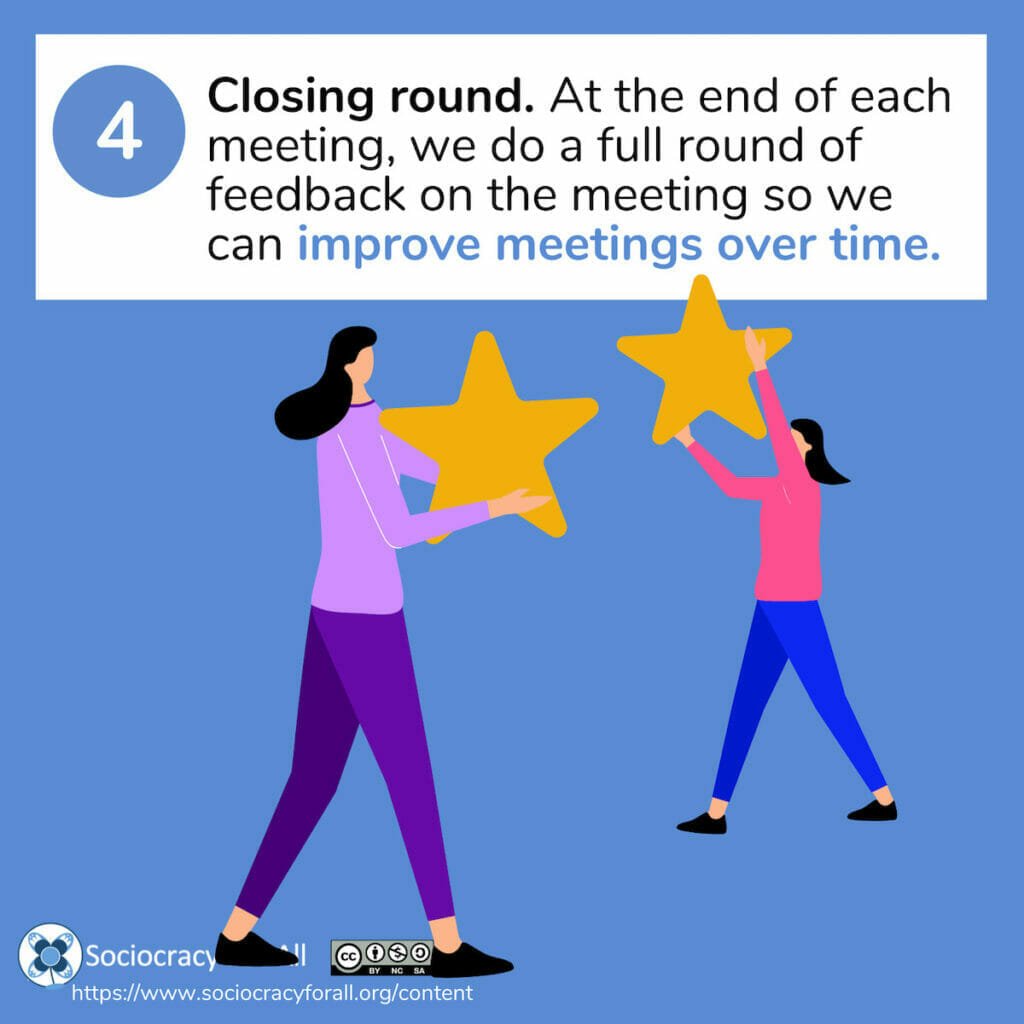
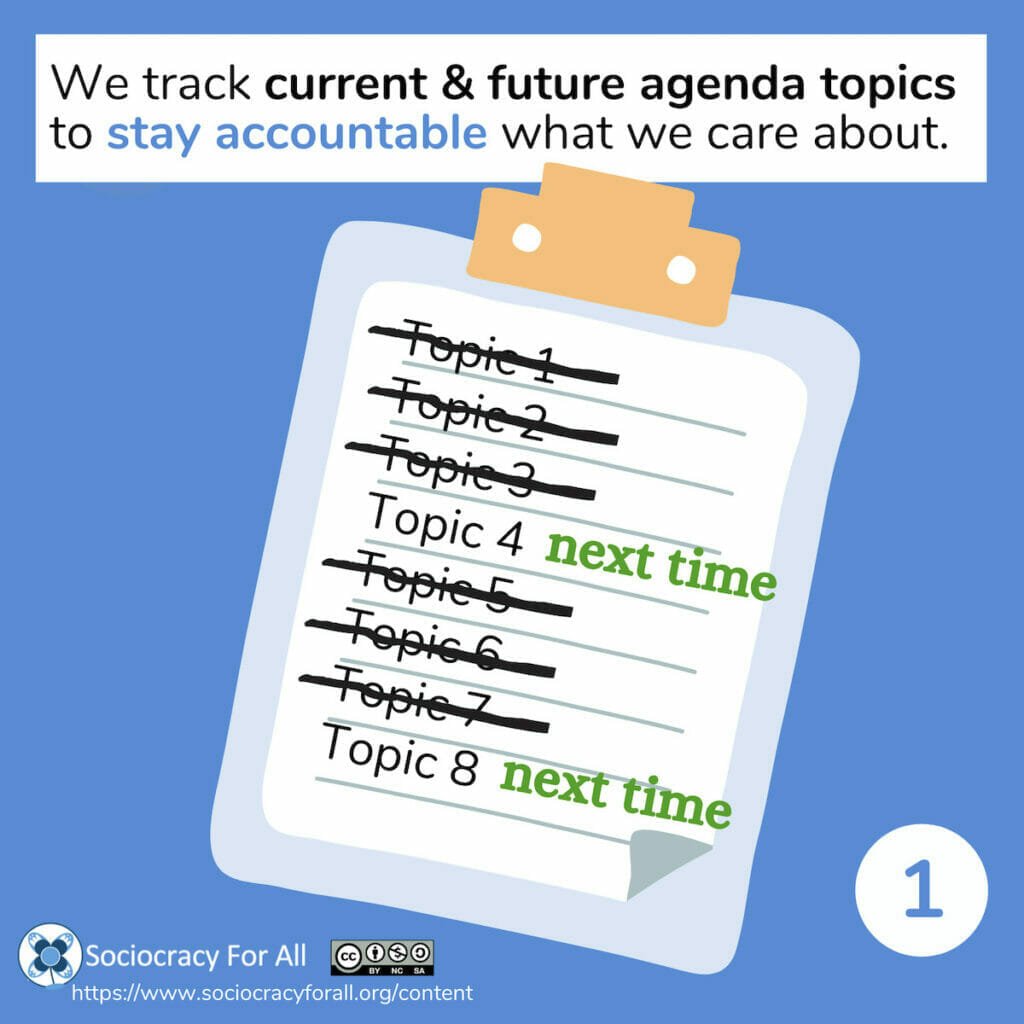
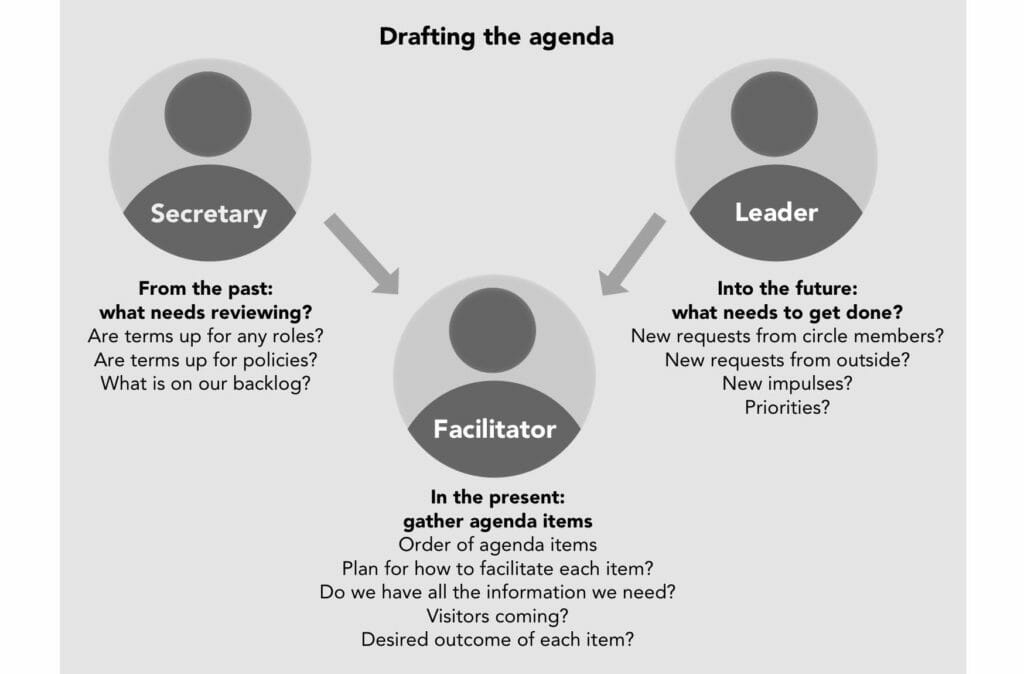
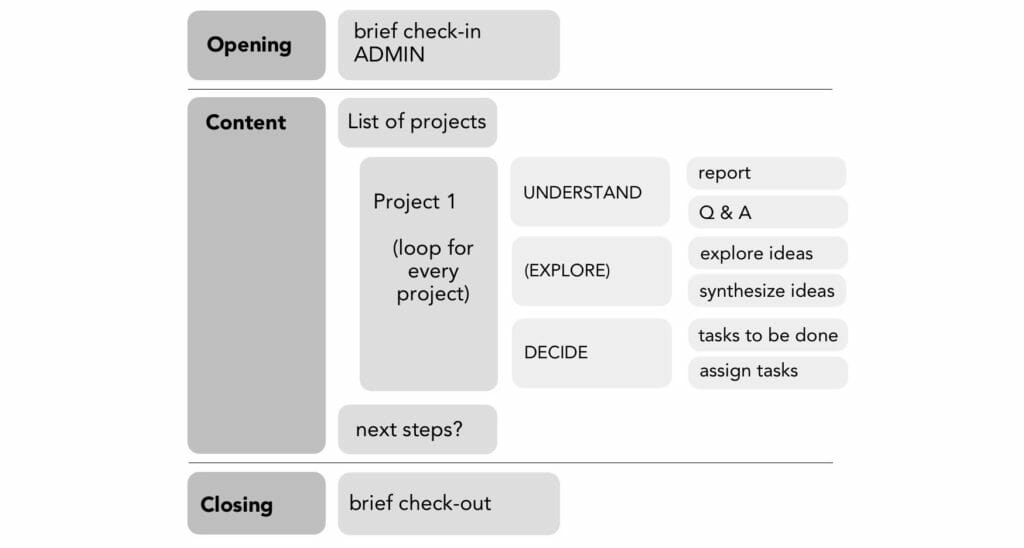
Sociocratic meetings are inclusive and efficient with a clear format:
- Opening: check-in and ADMIN
- Content of the meeting
- Consent to agenda
- Agenda items
- Review
- Check-out (meeting evaluation)
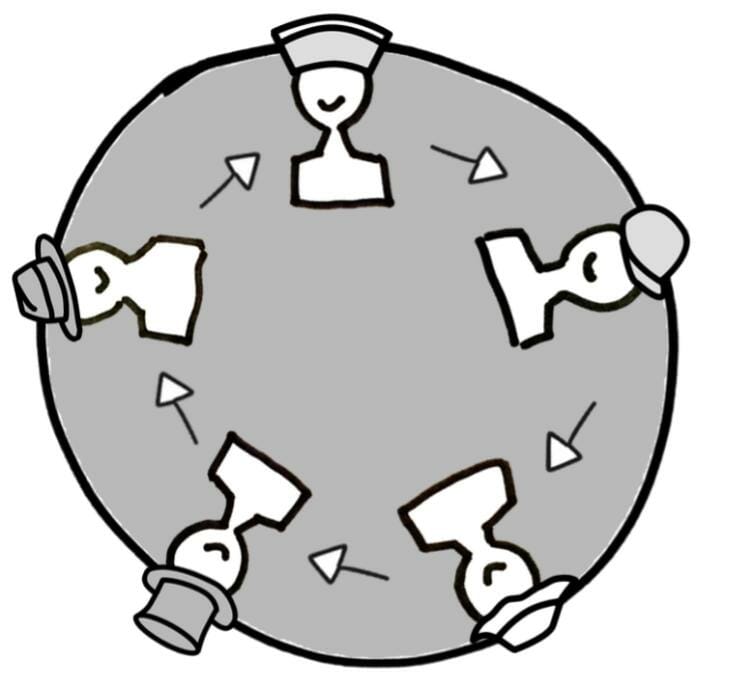
Facilitation is a focus of sociocracy. Rounds – the practice of speaking one by one – are commonly used in meetings to keep equivalence and focus. Rounds also make it easy to run virtual meetings in video calls.
Explore the language of sociocratic meetings.
Deepen your understanding by viewing the Visual Thesaurus map for sociocratic meetings.

Performance

All sociocratic processes are built on the basic idea of continuous improvement. Feedback is a way to improve what we do, both by creating feedback-rich organizations, a commitment to interpersonal feedback and formal, peer-oriented performance reviews. Other practices are: meeting evaluations in meetings, reviews for all policy decisions and for role selections.
Leadership in sociocracy is peer-oriented and based on accountability to own commitments and to the circle. Many people also combine sociocracy with restorative justice or Nonviolent Communication to align their practice with their values and to improve their effectiveness and communication.
Explore the language of performance.
Deepen your understanding by viewing the Visual Thesaurus map for feedback and improvement.
Selection process
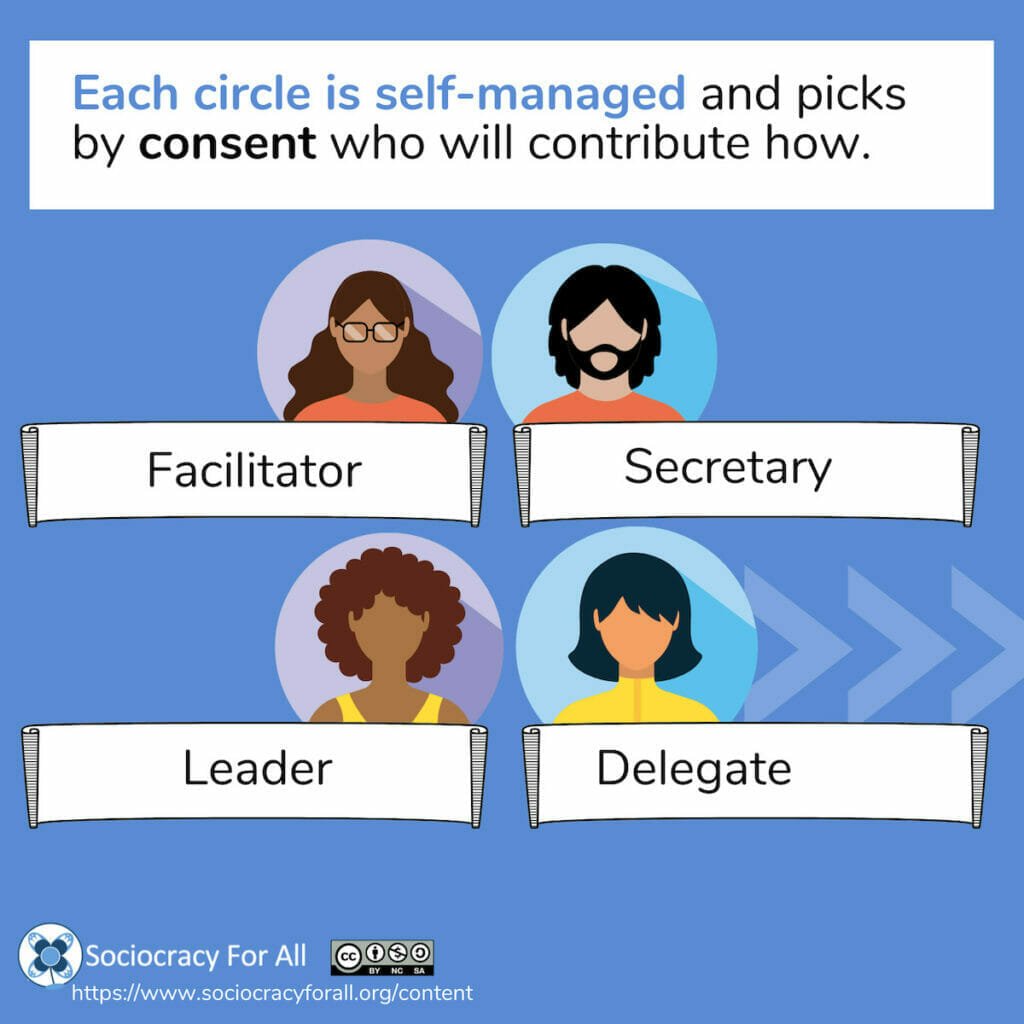
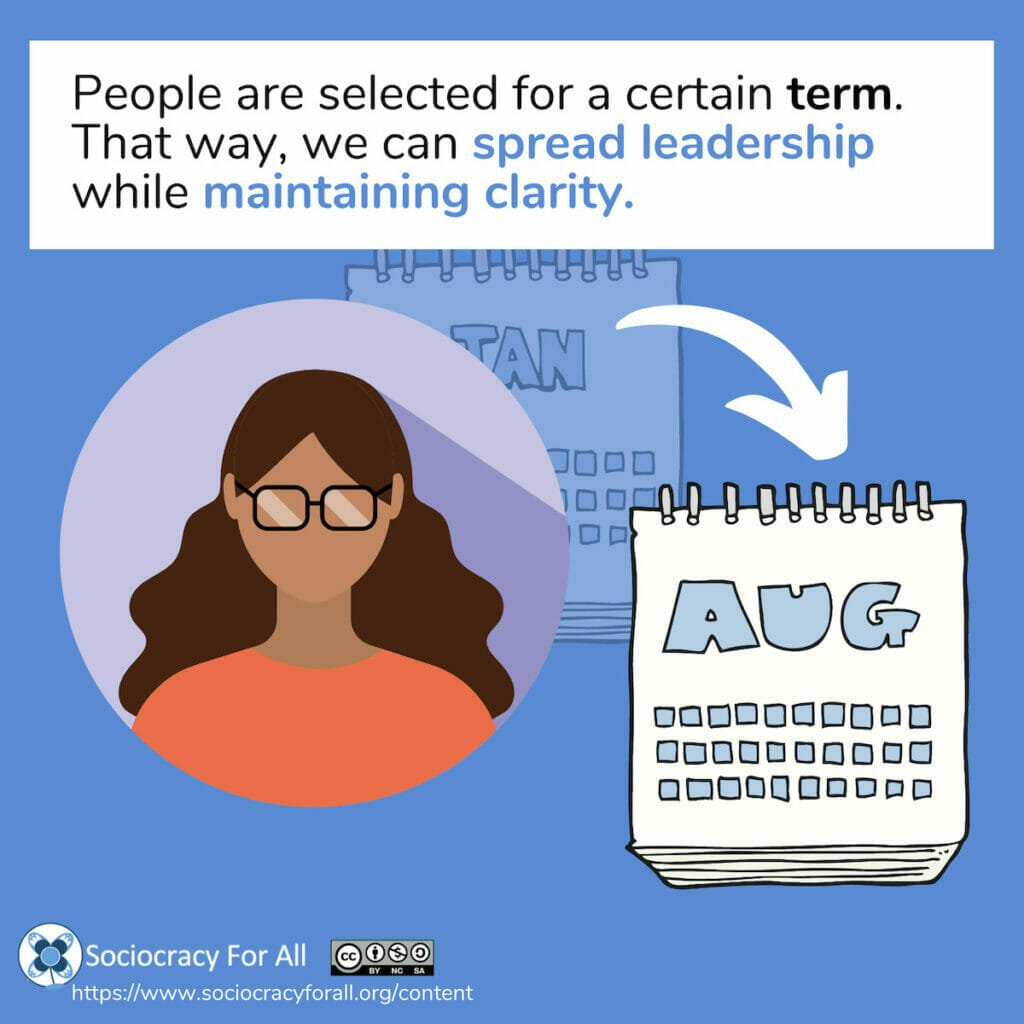
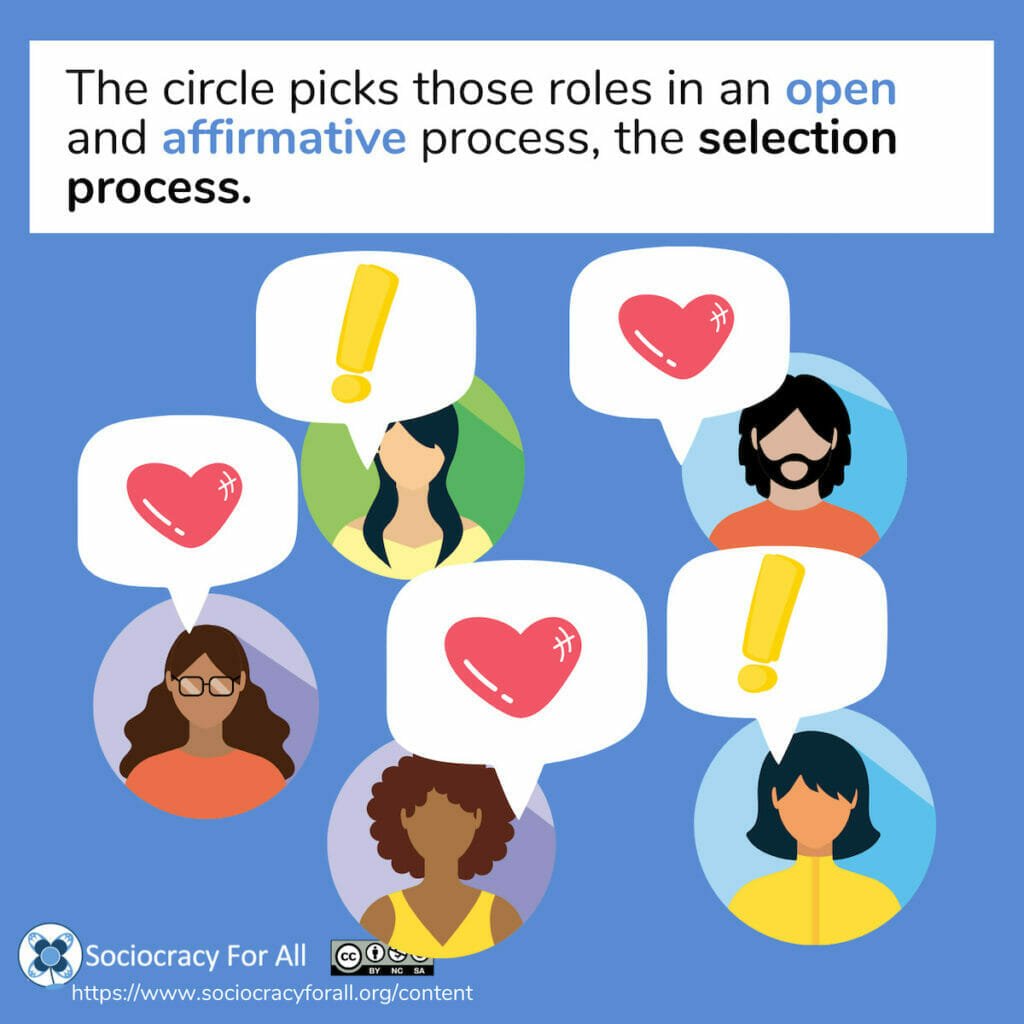
A sociocratic circle chooses together who will fill an operational or circle role. The most common process to choose that person is the selection process with nominations, change round and consent.
Explore the language of the selection process.
Deepen your understanding by viewing the Visual Thesaurus map for selection process.
Ready to learn?
More sociocracy resources: articles and videos
-

Consent decision making
Making decisions by consent – step by step! Everything is clear, everyone has a chance to get on board.
-
Sociocracy and Nonviolent Communication (NVC)
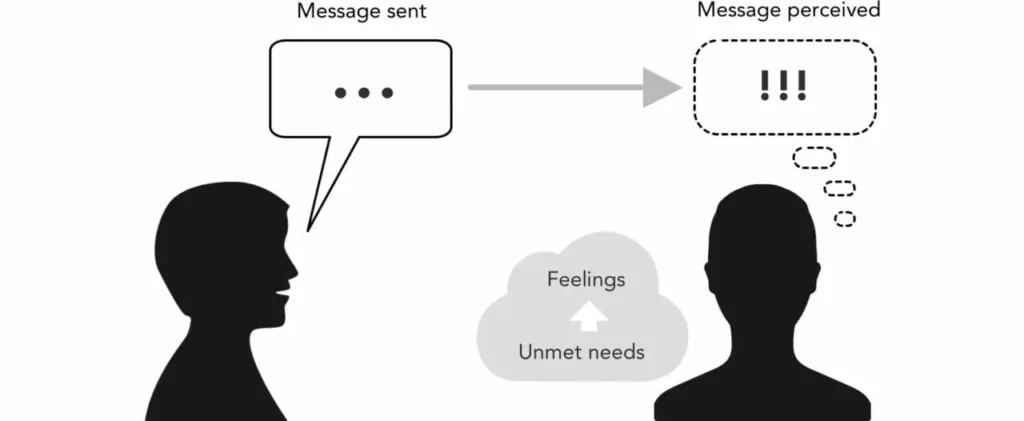
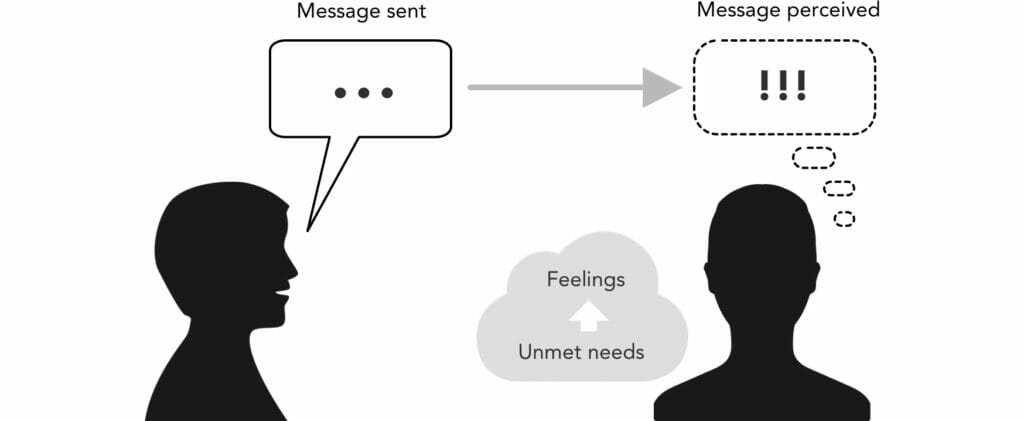
Language: Español Sociocracy and Nonviolent Communication (NVC) are often used together. For a good reason! The essence of Nonviolent Communication is “Everyone’s needs matter”. The essence of sociocracy is “Every voice matters” – sounds pretty similar, doesn’t it? In this article, I want to show how they share the same foundation and how they complement…
-
Sociocracy: The Worker Co-op Operating System
Language: Español Sociocracy: The Worker Co-op Operating System (By John McNamara. Originally posted on workersparadise.) Over the last couple of years, I have had the incredible opportunity to work with Sociocracy For All (SoFA). This organization has worked diligently to bring the concepts of sociocracy out of the “best kept secret” category and into the mainstream of…
-
SoLaWi
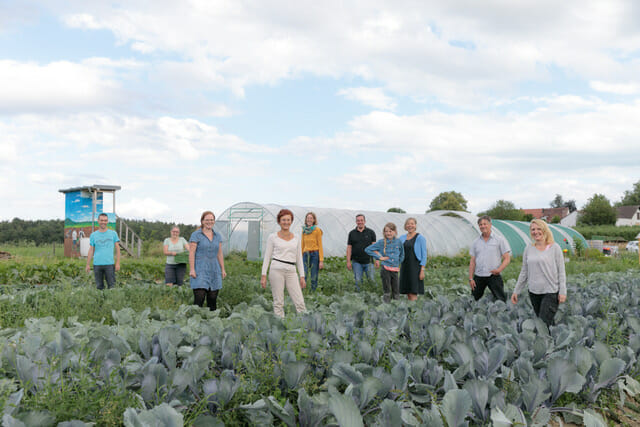
Solawi Bodensee is a German association with around 90 members. Solawi is an acronym for “Solidarische Landwirtschaft” which is translated as “solidary agriculture” and meaning “sharing the harvest”. It is similar to the US-concept of CSA, Community Supported Agriculture.
-
How sociocracy promotes vulnerability, trust, and psychological safety
A summary of research into psychological safety and shared leadership, and how sociocracy may promote benefits of psychological safety in the workplace.
-
Case study: 10pines
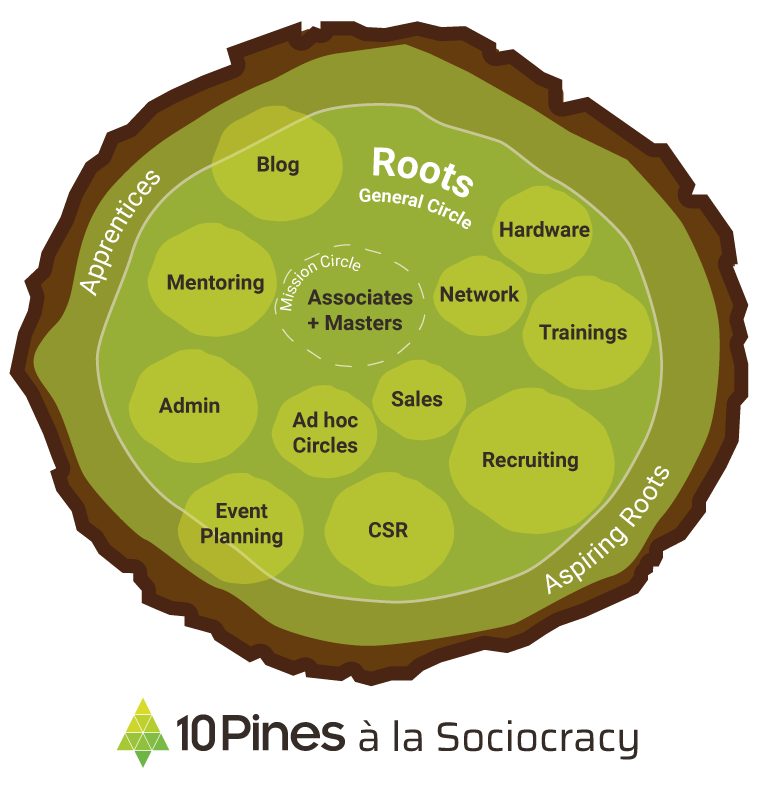
10Pines is a 10-year-old software development company headquartered in Argentina with agile manifesto values and a peculiar way of working at its roots. With 85 employees, 10pines has more than $3M in sales and it serves both startups and large clients such as Starbucks, Burger King, Turner, Claro, Teespring in North and South America. Due to…
-
The day I consented to a proposal I hated
Language: Español It was yet another Thursday morning 7.30am many years ago – our weekly support circle meeting in Sociocracy For All with 3 staff people present. We were all stretched thin at the time. The last few months had been a phase of wild growth, and although exciting and wonderful, the constantly evolving roles and…
-
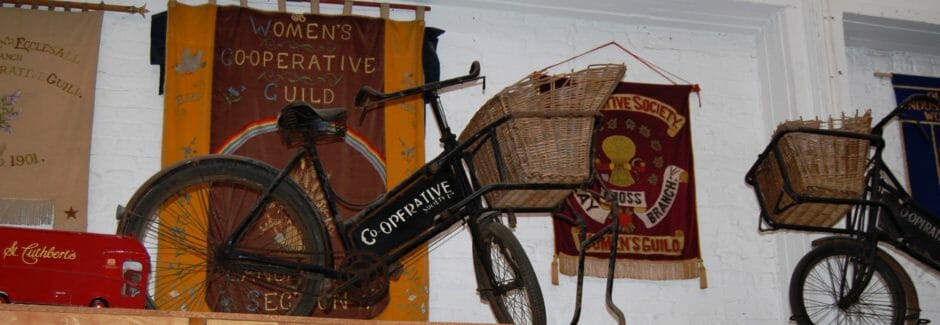
Manifesto For Wholesome Cooperation. Sociocracy and cooperatives
Sociocracy and cooperativism stem from the premise that humans thrive as social animals. We need each other. No human effort, made by a lone individual, succeeds. See how sociocracy and coops are a natural fit.
-
The tragedy of the meeting: Meeting time as an example of a common pool resource
Meeting time is lifetime shared with others. How do we share these resources well? This article highlights Prosocial’s Core Design Principles with the example of meeting time as a common pool resource and shows how tools from sociocracy help share time in a collaborative way.
-
What is a Help Desk?
After using sociocracy “by the book” for years and very successfully, we have started to introduce a new concept: a Help Desk circle. It introduces a small but extremely powerful nuance in what circles are and how we can decentralize decisions and operations while empowering everyone in the organization in moving things forward that they…
-
On rounds in sociocracy
Speaking in rounds is an essential tool of sociocracy. Rounds promote equivalence and every voice being heard.
-
The sociocratic meeting format
The sociocratic meeting format featured on Sociocracy For All streamlines meetings into three distinct phases: opening for readiness, content for agenda handling, and closing for evaluations. This method enhances meeting efficiency and decision-making.