Author: Ted Rau
-

How to implement sociocracy – a roadmap
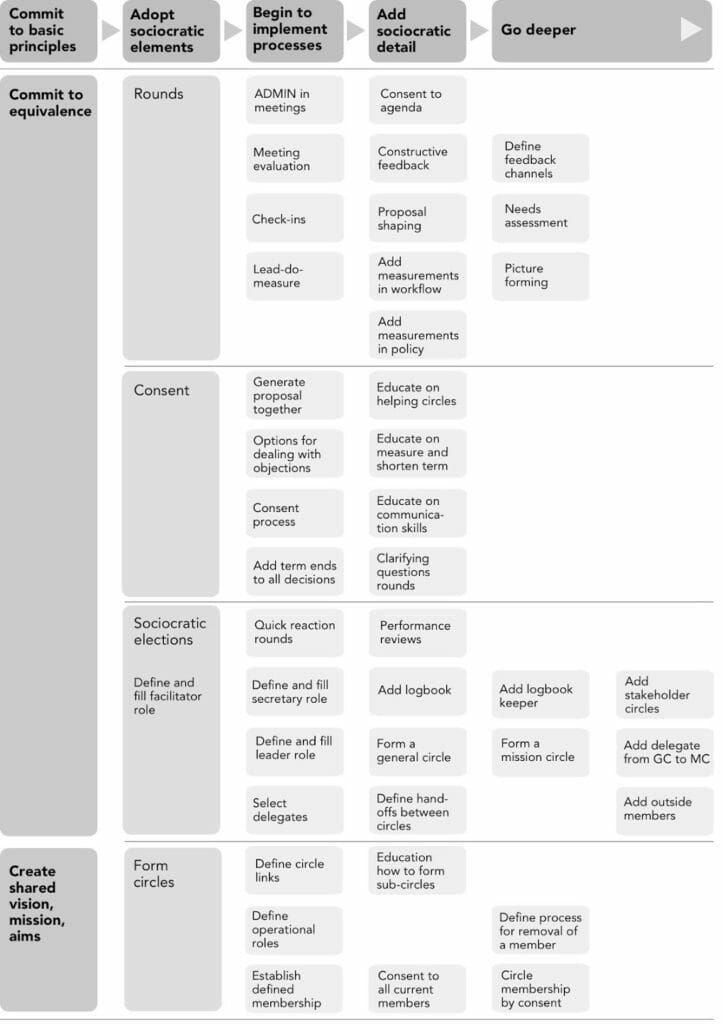
So, you want to implement sociocracy, but don’t know where to start? After gaining some basic knowledge, the next steps aren’t always clear. We’re here to help you out. First of all, let me say that I don’t believe in a cookie-cutter method. Every organization is a little different. And every organization has its unique…
-
Strategies for integrating objections
Integrating objections – how to Integrating objections is one of the core pieces of sociocracy. By integrating objections skillfully, concerns turn into a constructive force to improve your organization. This can be on the interpersonal level, on the level of the organization’s culture, or on the content level of your operations. As you cultivate more…
-
Sociocracy: The Movement
Curious about one of the roots of Holacracy? This overview of past and current also conveys the values of sociocracy and the emotional flavor of these distributed-decision-making systems
-
There is no hierarchy in sociocracy…right?
“Is there hierarchy in sociocracy?” is a fairly common question. And since people expect me to say no, I always say yes. Why? Because that’s the best way to get into a real conversation, and the real answer requires conversation, not a quick slogan. There are leaders in sociocracy. There is hierarchy in sociocracy. I…
-
The Ostrom Principles and Sociocracy
This blog post connects sociocracy, a participatory governance system, to the Ostrom principles for sustainable governance of CPR (common-pool resources). Sociocracy and Ostrom’s principles share very basic values and observations, which makes sociocratic governance a perfect fit for CPR governance.
-
Selection process
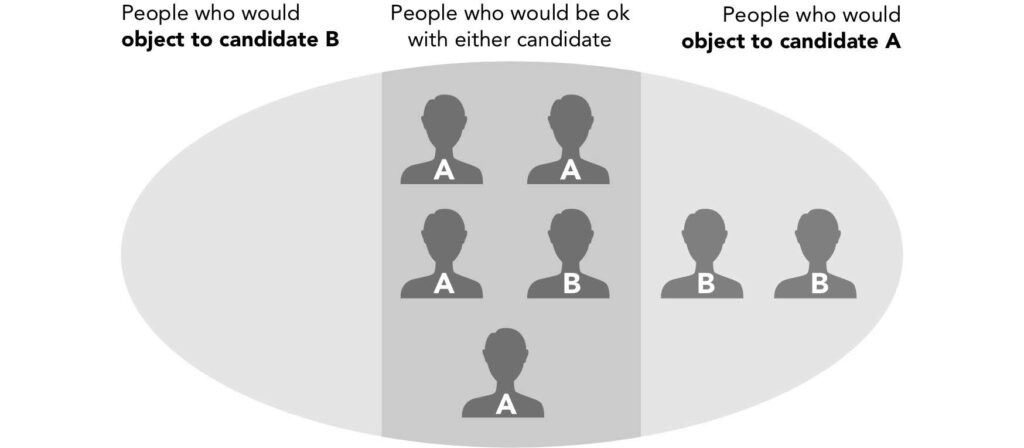
In this article: What is the sociocratic selections process? One of the richest processes in sociocracy, the selection process is sociocracy’s tool for electing people into leadership and other roles, known as the sociocratic selection process. It is also the process that diverges most from what we are used to doing. There are many reasons…
-
Circle roles in sociocracy (process roles)
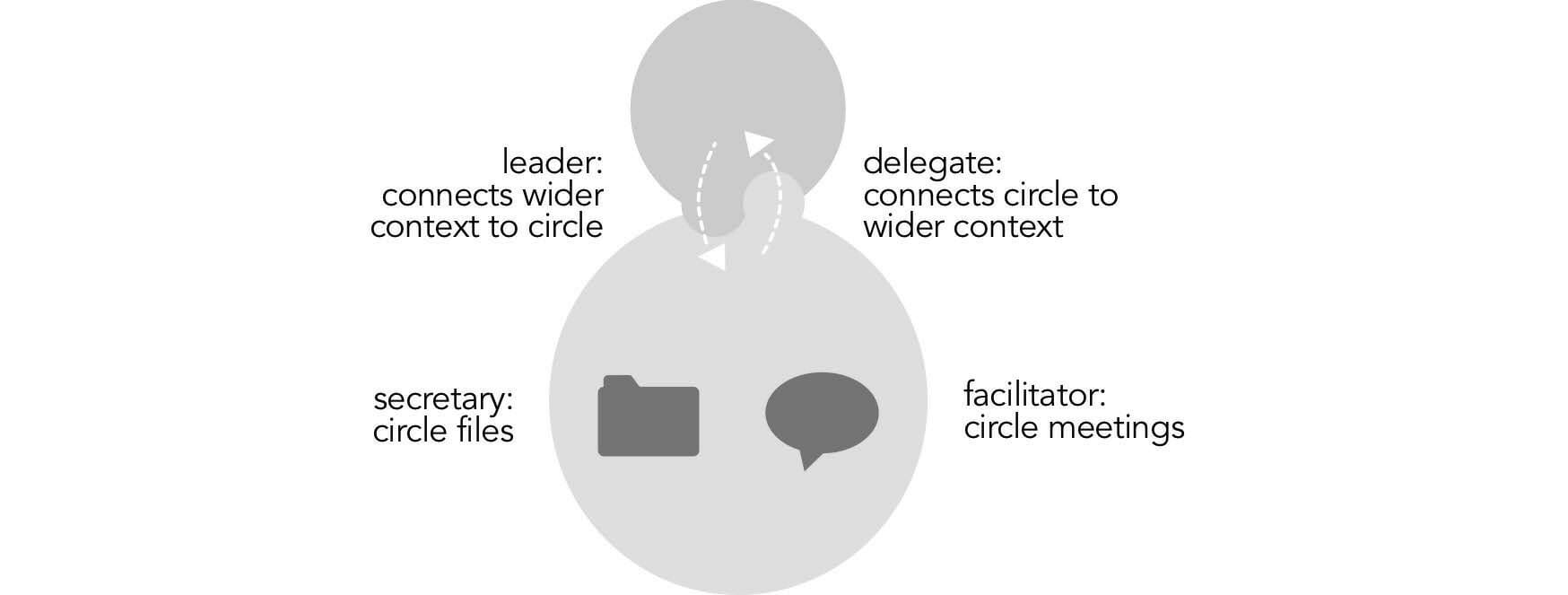
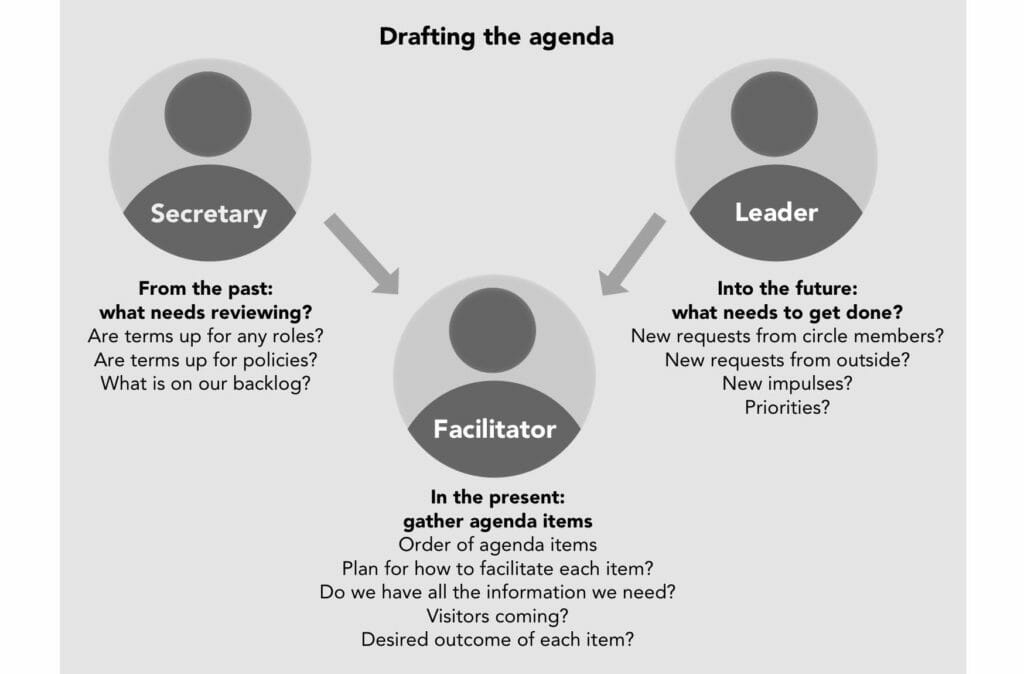
Leader, delegate, secretary and facilitators have roles that help the circle function.
-
On rounds in sociocracy
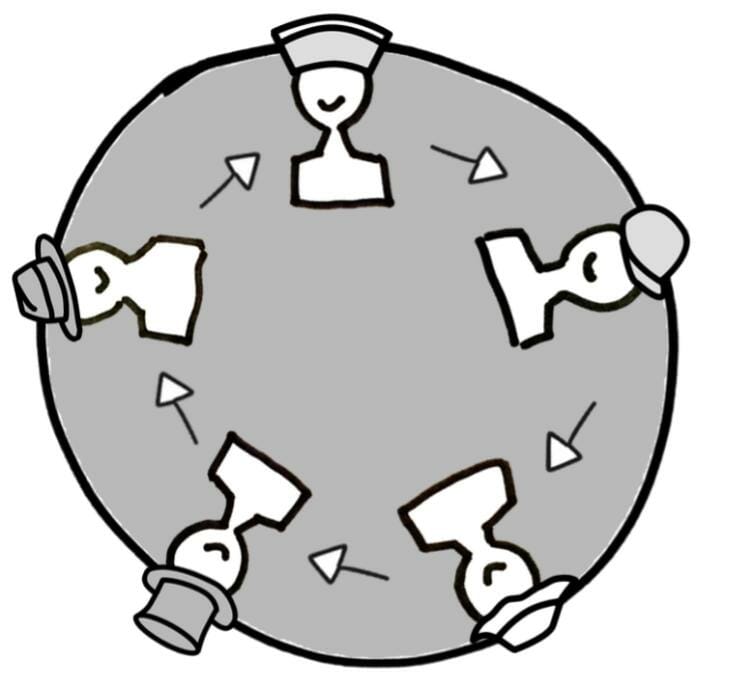
Speaking in rounds is an essential tool of sociocracy. Rounds promote equivalence and every voice being heard.