“Is there real research on sociocracy?” Yes!
Ongoing learning is a key part of sociocracy. It’s not about finding “the perfect system” but about building capacity and systems to unlock ongoing learning.
That’s why we find it important to work with researchers in the field who study self-management and other democratic processes. More research on sociocracy means better practice!
On this page, you can find articles studying sociocracy, videos of researchers that reflect on the work, and more summaries of relevant research that applies to sociocracy – albeit indirectly.
More research on sociocracy is needed to improve our practice and our understanding of how humans organize.
We are grateful for support from
The Rising Foundation!

What researchers say
Why this work matters
Prof. Nathan Schneider:
Why do we need governance skills?
A study on sociocracy
Renee Owen
Sociocracy and psychological safety
SoFA participated in an exciting study on sociocracy and psychological safety; it’s not public yet, but you can hear about the results here.
What’s useful to know?
Veiko Valkiainen
Unlearning learned helplessness
Also see his article on the same topic.

“One of the topics I study is the varied selection methods that can be used to allocate governance roles in organizations. I’ve always found Sociocracy’s selection process to be very interesting given its emphasis on open and inclusive deliberation among circle members. Sociocracy practitioners might be interested in a selection method that has a long history but isn’t yet mainstream: the targeted use of lotteries (or random selection). In a nutshell, a pool of potential candidates for a given role is created and then a lottery process—such as a roll of a die or a random number generator—is used to choose a ‘winner’ from among them. Lotteries’ ‘arational’ nature can generate important benefits for organizations, particularly those seeking to operate in a more democratic and horizontal manner, such as increased impartiality and improved access to leadership positions for less charismatic people. Sociocratic organizations could experiment with myriad applications of lotteries. For example, they could use them to allocate core process roles like facilitator or secretary from among all interested and qualified circle members or to convene more representative task forces to deliberate on strategic issues. I’d be happy to connect with any organization interested in learning more.”
Simon Pek, University of Victoria, Canada
Scientific articles about sociocracy
1. Academic articles researching sociocracy
(explicitly mentioning sociocracy)

Among Equals: Sociocracy as a Means of Improving Academic Collaboration and Participation
Every self-governing organization needs a structure that ensures it can make the decisions necessary for its operation and preservation. These structures can range from a centralized authority entrusted with all decisions to a consensus-based model whereby all interested parties must agree before a decision is reached. This article describes why PULSE chose sociocracy, an inclusive form of governance based on consent of the governed. We describe the key features of sociocracy and explain how it has been valuable not only for ensuring a collegial atmosphere and effective decision-making among PULSE Fellows, but how it has affected the ways in which PULSE Fellows operate in their own spheres of influence. We propose that this form of governance can be used in a variety of settings to foster community, collaboration, and shared decision-making.
Transformative Dialogues: Teaching and Learning Journal Spring 2026, Volume 19, Issue 1. https://doi.org/10.59236/td2026vol19iss12006
Also see in the same series the article “The Origins of PULSE as an Organizational Change Network” which talks about PULSE’s own history of sociocracy.

The Possibilities of Sociocracy in Nonprofit Organizations (King, Griffin)
This recent study looks at sociocracy as an alternative form of democratic governance in a nonprofit context. Based on a case study of a co-housing nonprofit, the authors report that sociocracy empowered members and reduced traditional power hierarchies, thus mitigating risks of domination. However, they also identified four forms of persistent inequality that can emerge even under sociocratic governance, highlighting challenges in practice. The paper concludes that while sociocracy offers notable benefits for participation and voice, it is not a cure-all and requires ongoing attention to issues of inclusion and power dynamics
King, D., Griffin, M. Governing for the Common Good: The Possibilities of Sociocracy in Nonprofit Organizations. Voluntas 35, 1046–1057 (2024).
Living Democracy: Social Structures that Promote Civic Learning (Hoggan, Hoggan-Kloubert, Owen)
It is through the social structures we live in and the resulting social relations, behaviors, and norms emanating from those structures, that we learn how to live together, democratically or otherwise. Adult education can promote the learning of democracy by helping people develop social structures that are democratic in form and function. This article presents two such structures: (1) the system of voluntary associations in Germany; and (2) sociocracy as a form of democratic institutional governance. This article discusses how these structures can promote processes through which participants practice living democratically. Six principles for adult civic learning are thus derived: Inclusivity, Horizontal Relationships, Polycentricity, Confluence of Expert and Amateur, Interdependence between Specific Situations and Larger Contexts, and the Reciprocal Nature of Civic Learning and Solidarity.
Hoggan, C., Hoggan-Kloubert, T., & Owen, R. (2023). Living Democracy: Social Structures that Promote Civic Learning. Adult Learning, 34(3), 168-180.
The sociocratic model of organizing (Rommes)
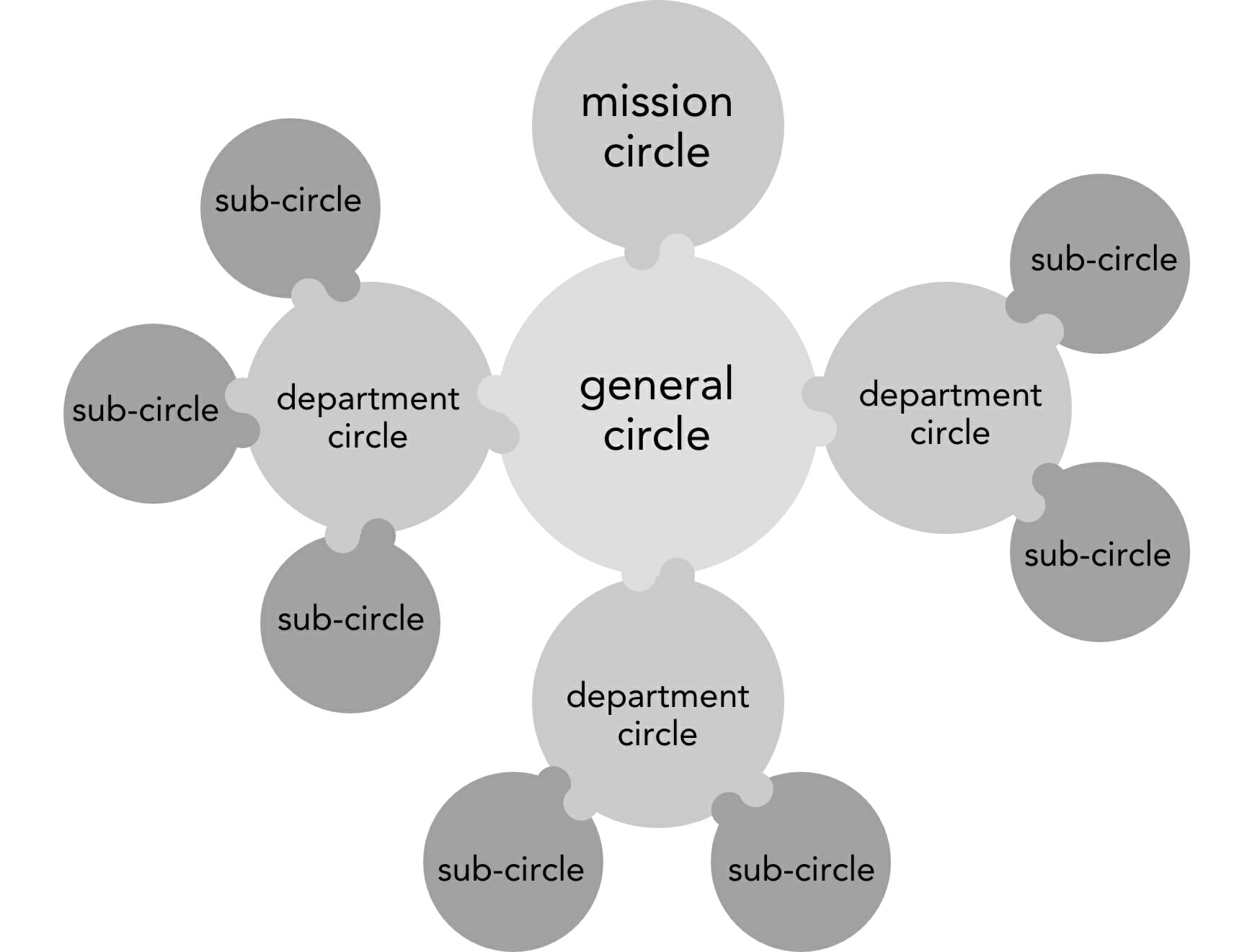
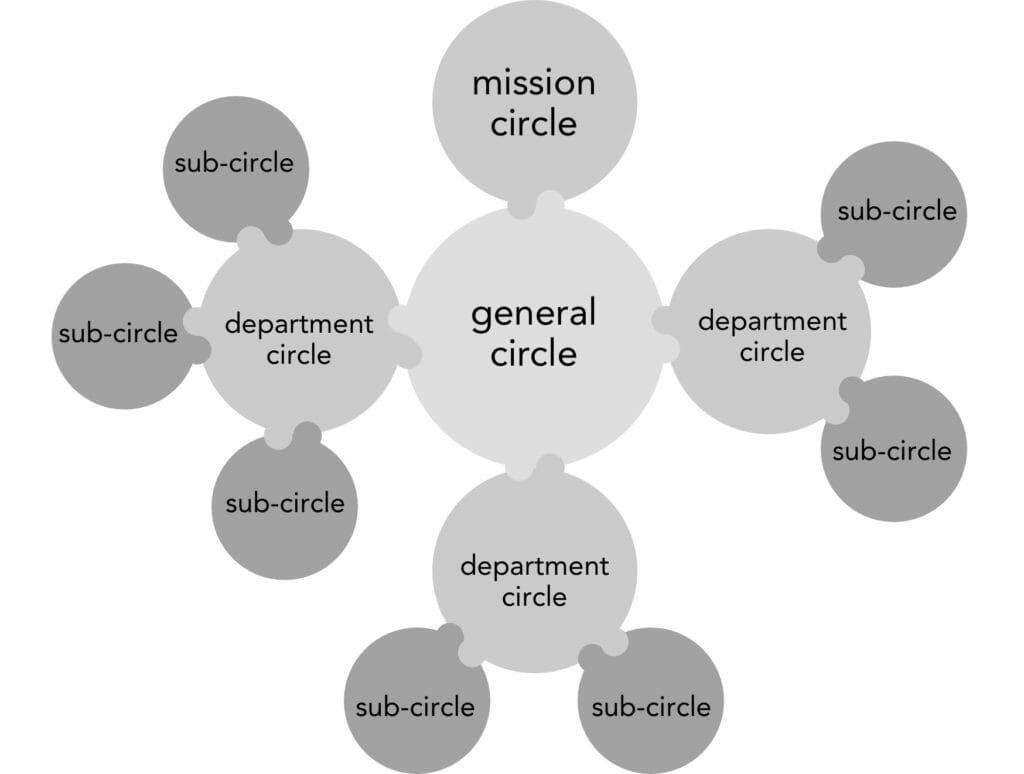
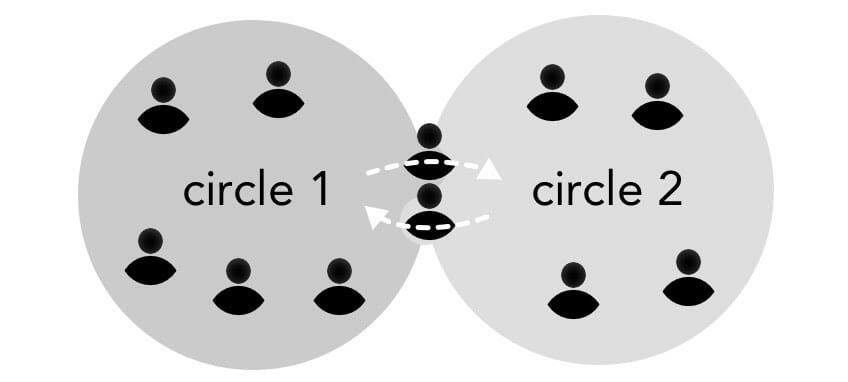
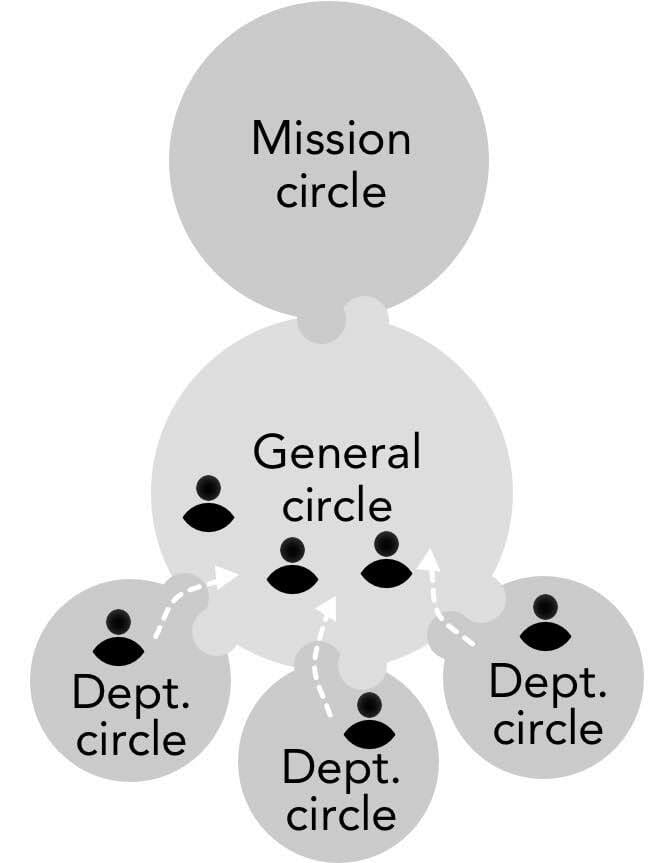
This seminal article introduces the sociocratic model as a governance system based on four key principles: decision-making by consent, a hierarchy of circles (inclusive of all members), double-linking between circles, and the election of people to roles by consent. Romme demonstrates how these structures promote two-way information flow and participative decision-making throughout an organization, in contrast to top-down bureaucracies.
Romme, A. G. L. (1995). The sociocratic model of organizing. Strategic Change, 4(4), 209–215.

Creating the conditions for reflective team practices: examining sociocracy as a self-organizing governance model that promotes transformative learning,
This article examines one particular case, Rainbow Community School ad its accompanying successful outcomes for
Rainbow Community School, including increased equity and
advanced cognitive development of students, as evidenced by
the Lectica Reflective Judgment test.
Renee L. Owen & John A. Buck (2020): Creating the conditions for reflective team practices: examining sociocracy as a self-organizing governance model that promotes transformative learning, Reflective Practice, DOI: 10.1080/14623943.2020.1821630

Domination, self-determination and circular organizing.
The emergence of self-organizing forms of control, based on the idea of self-determination, have challenged traditional forms of control based on the concept of domination. As such, self-determination has been put forward as an alternative rather than as a complement to domination. This paper describes and explores the circular forms of organizing that have been emerging in several parts of the world, viewing them as a possible synthesis of two existing archetypical concepts of power-self-determination and domination. In particular, the emergence of circular organizing in the Dutch company Endenburg Elektrotechniek is documented and interpreted. This case illustrates how a circular structure can be superimposed on the administrative hierarchy, with the latter continuing to play a substantial role in controlling and managing work processes. In the absence of a single ultimate authority, organizational control is exercised through feedback rather than power. As a result of this study, circularity of power is shown to be an interesting theoretical and instrumental concept.
Romme, A. G. L. (1999). Domination, self-determination and circular organizing. Organization Studies, 20(5), 801–832.
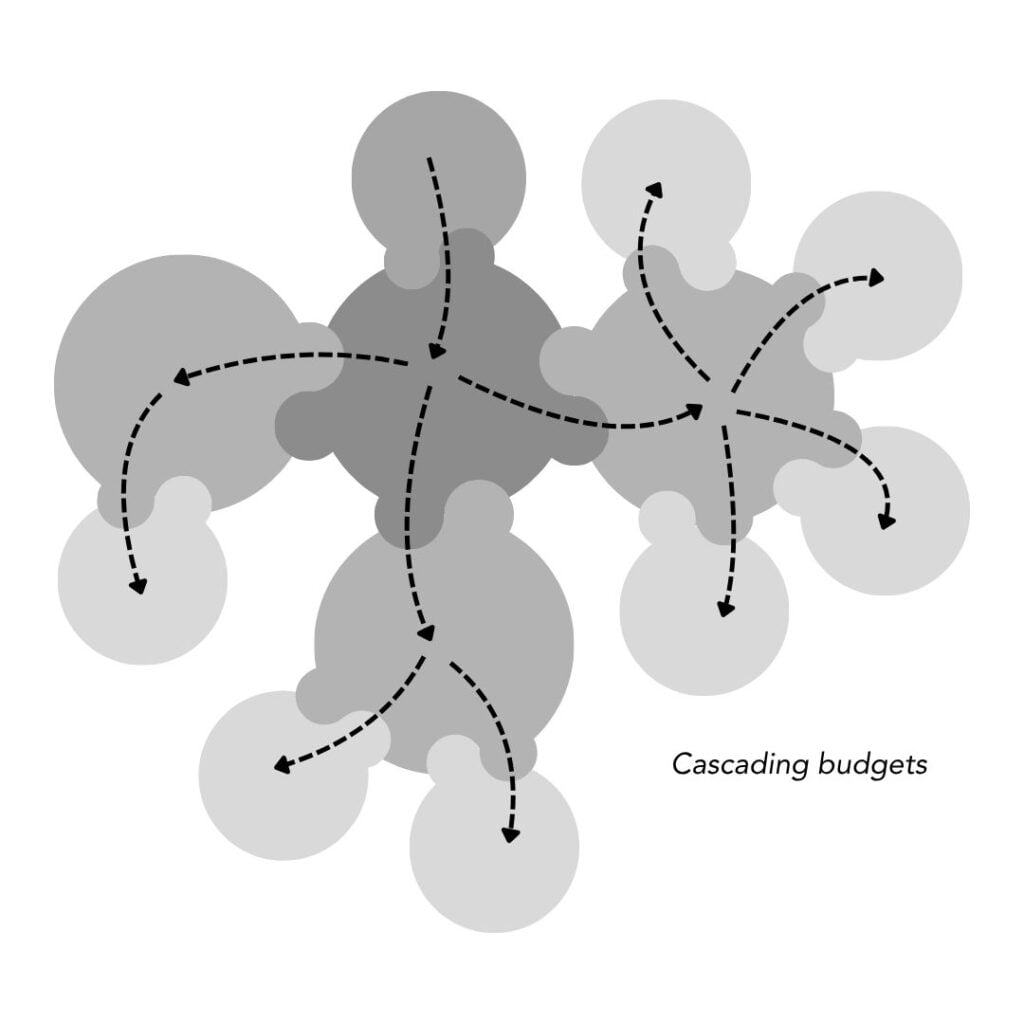
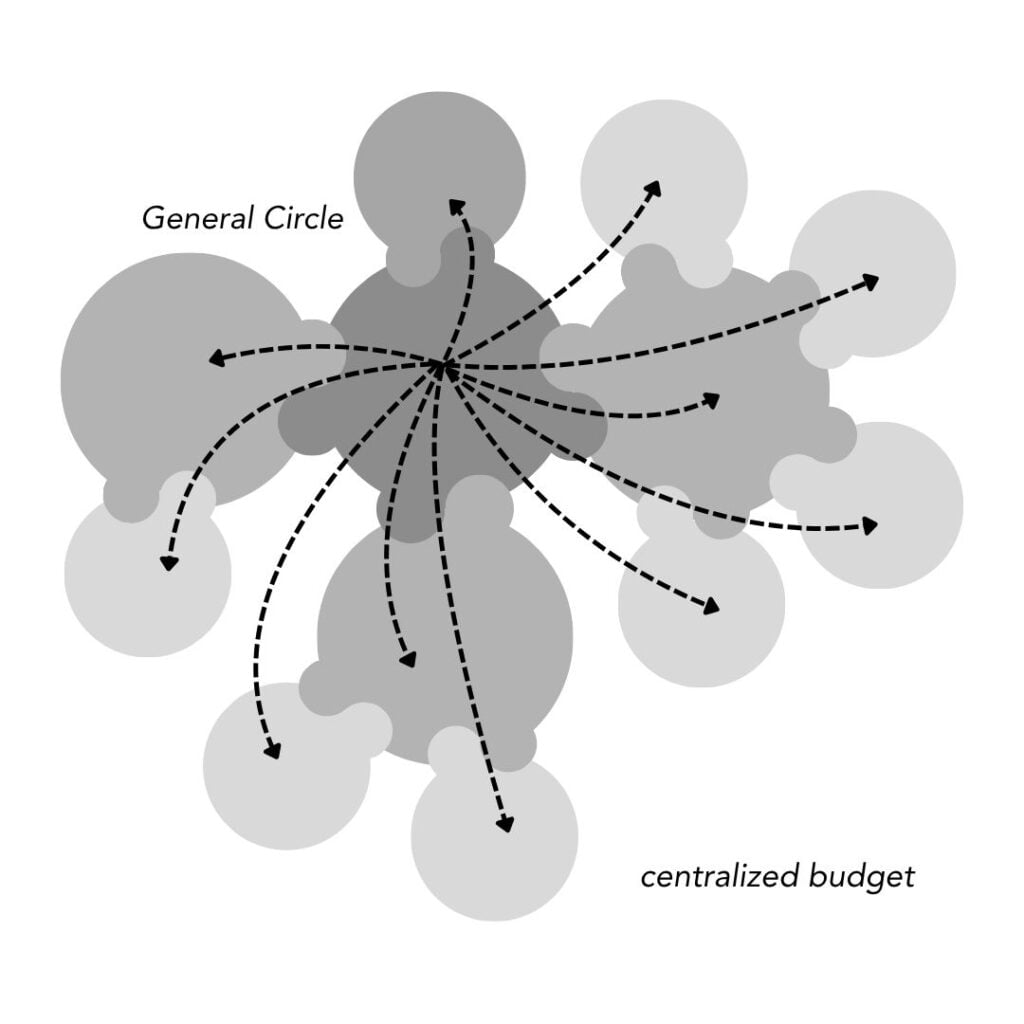
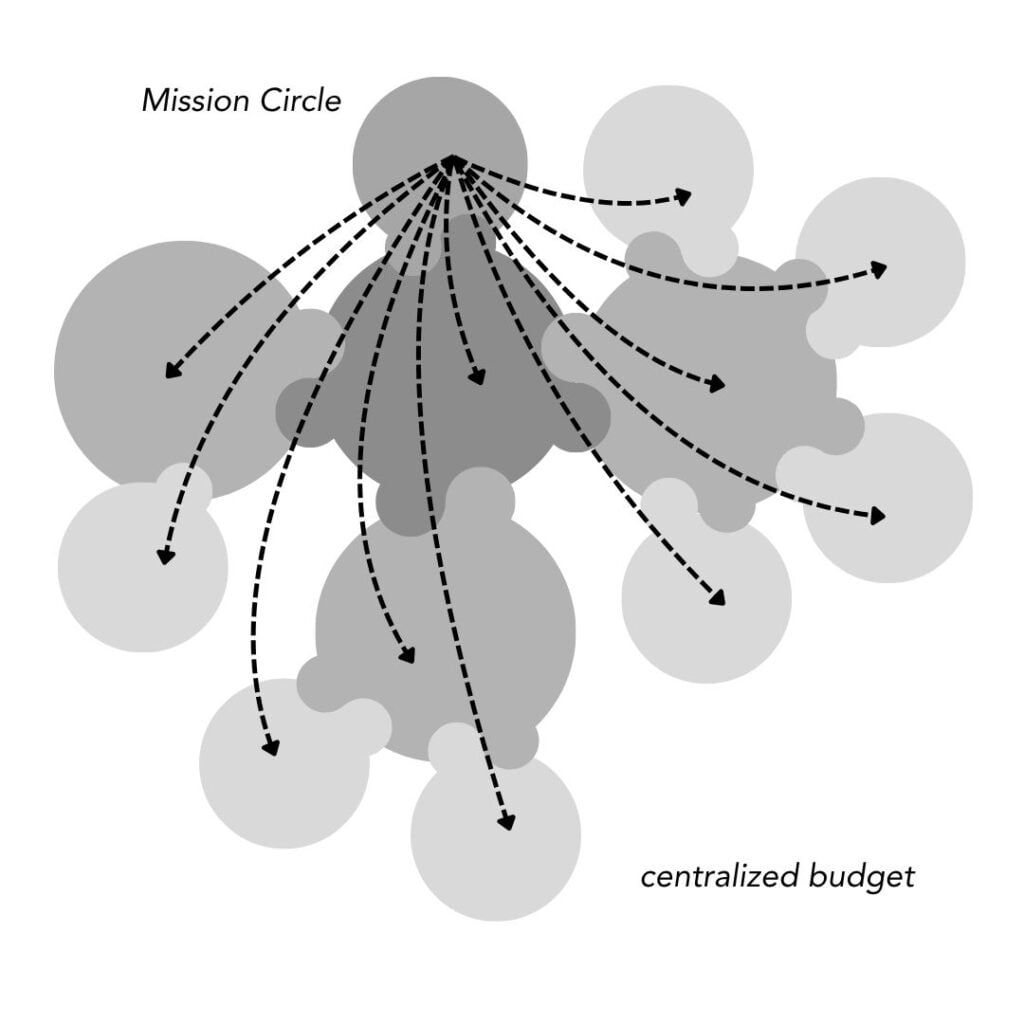
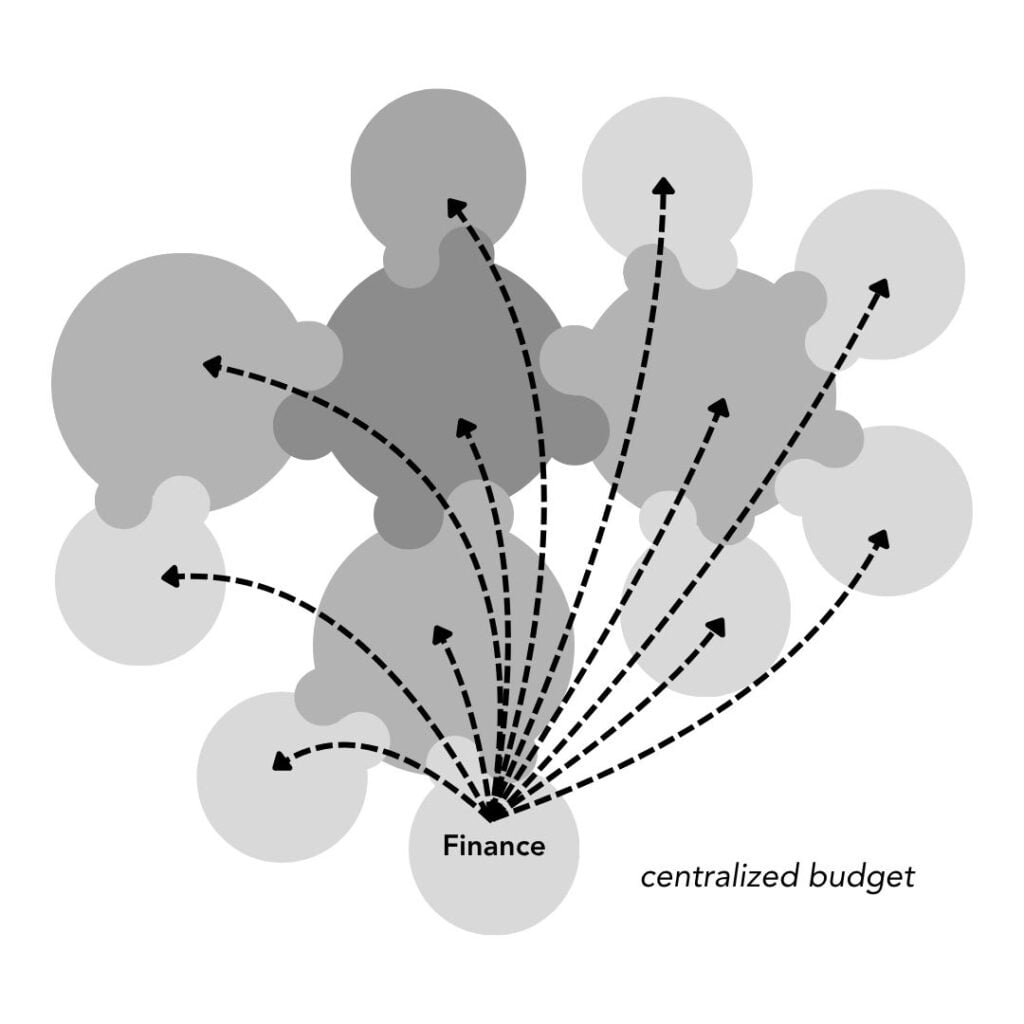
Decentralization and Centralization in Sociocratic Organizations—Dynamics, Combinations, and Hybrid Solutions
The article discusses the interplay between decentralized and
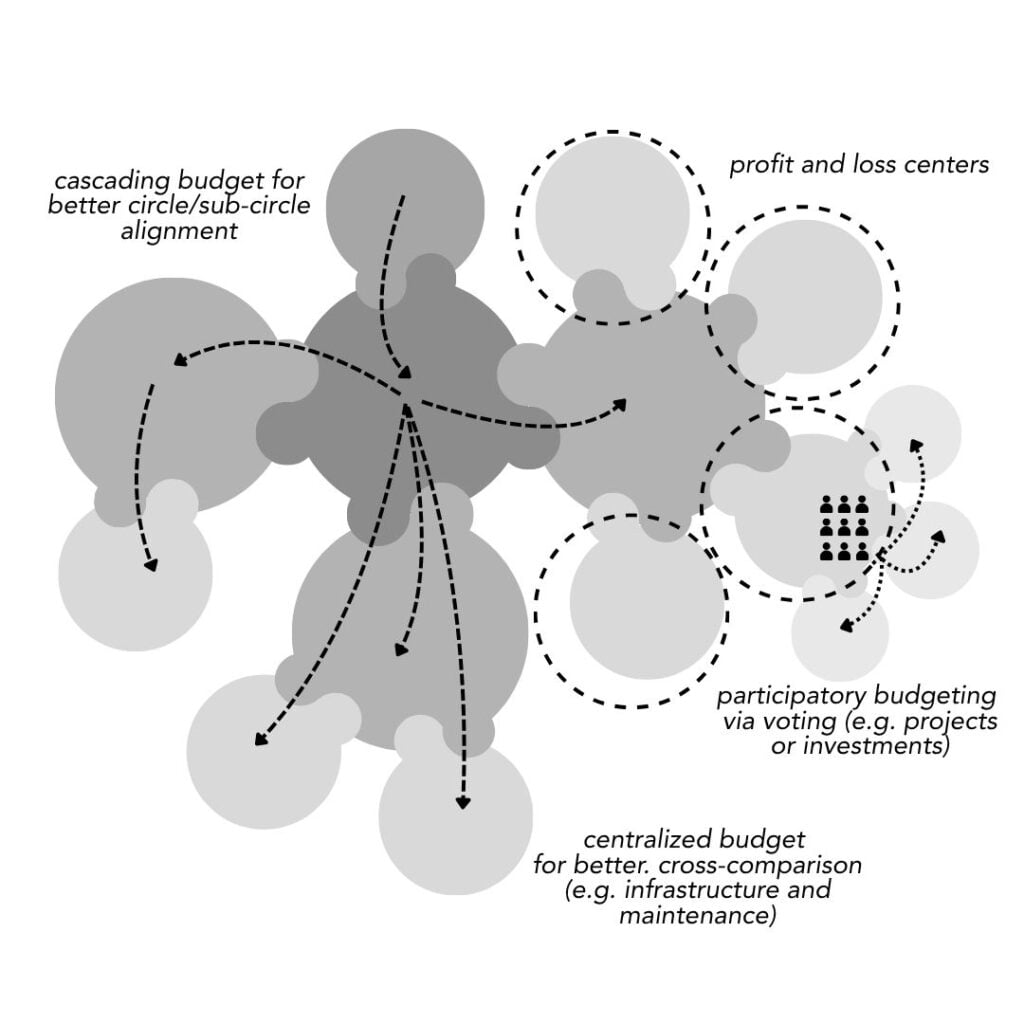
centralized aspects of governance in the context of decentralized self-governance and shares learnings from Sociocracy For All’s (SoFA) experience, including that decentralization is an active process that requires preparation, budget, strategy, and information can act as centralizing forces, and decentralization requires different ways of thinking about responsibility and
leadership. SoFA is a young membership organization founded in 2016 promoting sociocracy, a governance system with consent-based decision-making in small groups, in nonprofits and other organizations.
Rau, Ted PhD (2023) “Decentralization and Centralization in Sociocratic Organizations—Dynamics,
Combinations, and Hybrid Solutions,”
Journal of Nonprofit Innovation: Vol. 3: Iss. 1, Article 8.
Summaries of research results relevant to self-management and psychological safety
While sociocracy is understudied as a method, there are insights from other realms that help us understand the effects of sociocracy on the topics of performance, feedback, psychological safety, employee voice, and effective teams.
Rounds, turn-taking, and team performance
Feedback and Self-management: What Science tells us
How to promote vulnerability, trust, and psychological safety


Benefits of feedback processes and employee voice in sociocracy
Dividing Up Work and Decision-Making for Effective Teams
Sociocracy is democratic and self-managing: What are the benefits?


What can sociocracy learn about best practices from research on self-management?
Does self-management increase diversity in teams? (Probably not.)


Key academic articles researching methods similar to sociocracy
- Breit, Elsa (2023). Organisationale Spannungen und Paradoxien in radikal selbst organisierten Unternehmen. (German)
- Malik, E., Shankar, S., S. Nandram, S. et al. A systematic review of the global evolution of self-managed organizations through key characteristics and strategies. Discov Psychol 5, 162 (2025). https://doi.org/10.1007/s44202-025-00529-y
- Mont, Simon (2017). Autopsy of a Failed Holacracy: Lessons in Justice, Equity, and Self-Management
- Pek, S. (2021). Drawing out democracy: The role of sortition in preventing and overcoming organizational degeneration in worker-owned firms. Journal of Management Inquiry, 30(2), 193-206.
- Pek, S. (2024). Sortition and the democratic governance of cooperatives. In The Routledge Handbook of Cooperative Economics and Management (pp. 292-302). Routledge.
- Pek, S. (2023). Reconceptualizing and improving member participation in large cooperatives: insights from deliberative democracy and deliberative mini-publics. M@ n@ gement, 26(4), 68-82.
- Pek, S., & Busaan, L. (2026). Advancing Employee Voice Through Insights From Democratic Innovations. Human Resource Management Journal.
- Rau, T. (2025). Power-With Instead of Power-Over: Preventing and Addressing Conflict in Communities with Sociocracy. Chapter in: Palgi, M. S. Getz (2025) Conflicts and Conflict Management in Intentional Communities. De Gruyter. (Focus on conflict resolution)
- Schell, S., & Bischof, N. (2022). Change the way of working. Ways into self-organization with the use of Holacracy: An empirical investigation. European Management Review, 19(1), 123–137.
- Weirauch, L., Galliker, S., & Elfering, A. (2023). Holacracy, a modern form of organizational governance: Predictors for person–organization fit and job satisfaction. Frontiers in Psychology, 13, 1021545
- Valkiainen, V. (2026). The human side of self-managing organizations: Unlearning the learned helplessness. Human Relations. Link: https://journals.sagepub.com/doi/10.1177/00187267261420797
Contact: [email protected]